
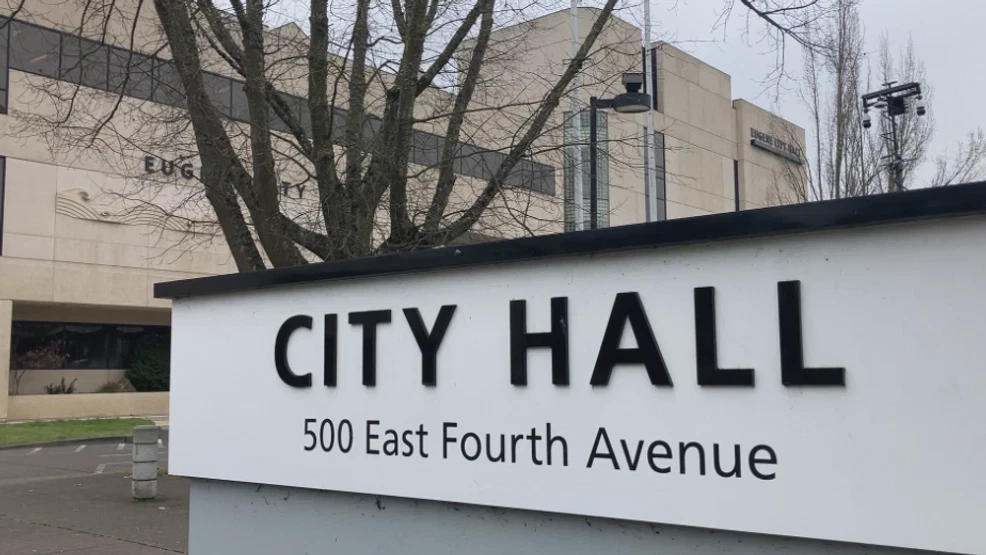
EUGENE, Ore. — As the City of Eugene moves forward with budget recommendations from its recently formed Technical Advisory Group on Fiscal Stability — a panel of financial experts assigned to identify ways to steady city finances — the city’s chief financial officer said she cannot predict how long it will take to achieve lasting budget stability.
Twylla Miller has served as CFO for two years, but she said the city has faced a persistent budget gap for decades.
Miller explained that Eugene has tried to manage the gap through budget cuts, new revenue sources, and shifting expenses to alternative funding streams, yet the shortfall continues.
She said rising retirement costs, property tax caps, overall spending, wages, inflation, and financial adjustments to meet service demands have all played a role in creating the deficit.
“The city is providing services in the past that we haven’t. I think of things like unhoused work and sustainability and climate efforts, where if you think back 20, 30 years ago, the city didn’t have a role in those things that they do now. So there are services that have been added to the system in response to the community desire. Those aren’t service adds that have actually triggered the gap. It’s a combination of all of those things,” Miller said.
Earlier this month, the Technical Advisory Group released a report exceeding 400 pages and presented it to the city council. The group urged the city to create thousands of jobs and generate $25 million in new tax revenue over the next 10 years. Officials believe that growth will draw more residents and increase property tax revenue directed into the general fund.
Over nearly the past two decades, the city has brought together several task forces and advisory groups to confront ongoing budget challenges.
“This group is invested in the future of our community and really wants to partner with the city and with the region. So this feels a little different, maybe, than some of the other groups,” Miller said. “When we think about economic development, there’s the regional corridor that’s been talked about — working with our partners — really having a targeted strategic approach.”
Miller noted that the city had already begun acting on some recommendations, such as improving operational efficiency. Still, she emphasized that a coordinated regional effort will ultimately make the biggest difference in closing the budget gap and encouraging economic growth.
She added that the city also plans to take a more proactive stance on budgeting by launching long-range financial planning this spring.







Leave a Comment