

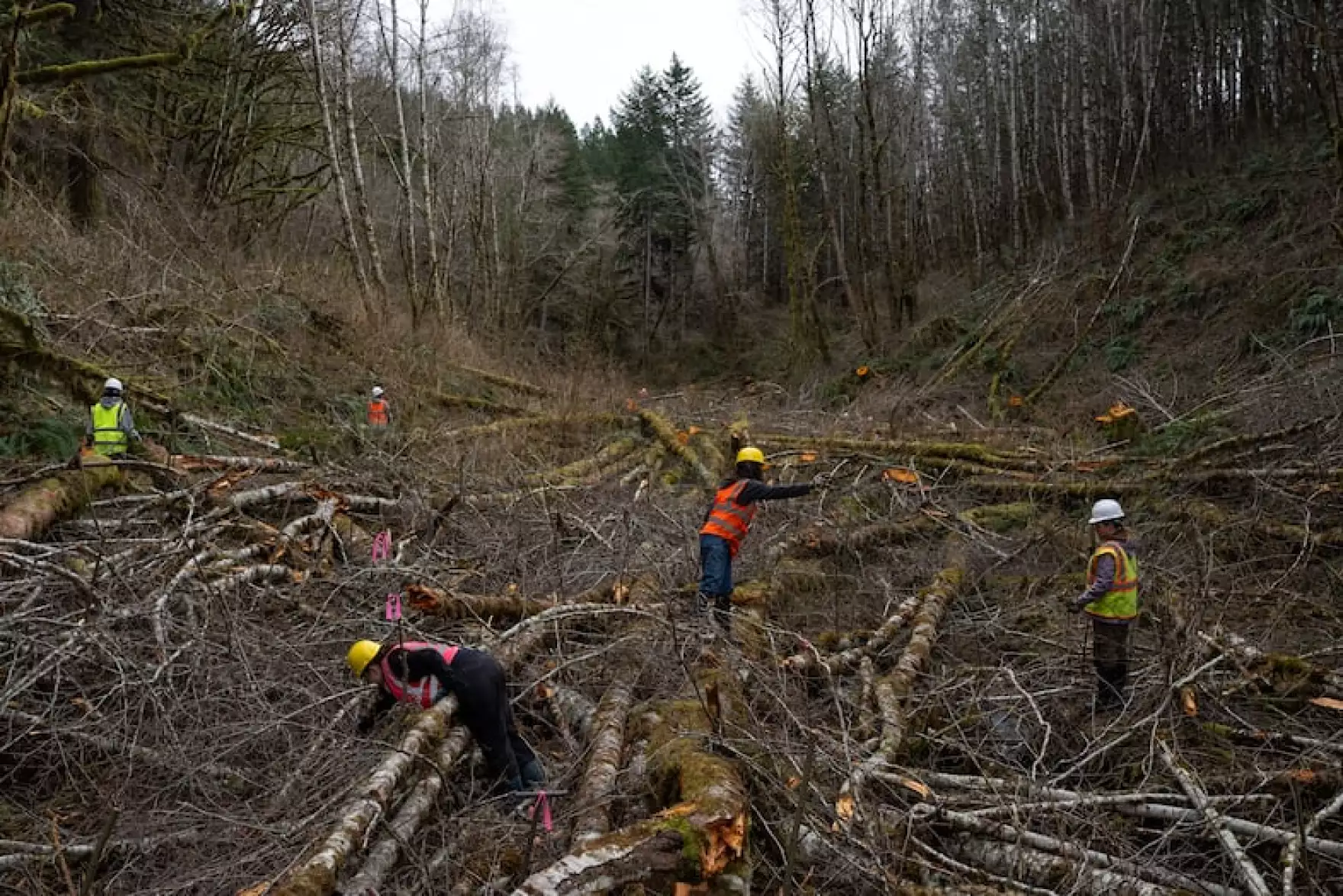
PHILOMATH, OR — For many high school and college students, spending a Saturday trudging through mud, climbing over fallen trees, and planting saplings may not sound like fun—but for participants in the Marys River Watershed Council’s Youth Watershed Council, it’s a rewarding way to help both the environment and their community.
Founded in 2021, the youth program engages students in hands-on ecological restoration projects along tributaries such as Shotpouch Creek in Lincoln County. Over the past three years, students have planted trees, built small dams, and removed invasive plants to restore waterways to their historic ecological conditions.
“I think this generation feels a lot of pressure about climate change and other global issues,” said Nina Dominici, education program director for the Marys River Watershed Council. “This program gives them a space of hope to make a difference in their corner of the world.”
The restoration work is part of a 15-year effort by the council to work with local landowners to repair damaged streams affected by logging and cattle grazing. Projects include installing livestock fencing, planting native trees, and improving fish passage—measures that help maintain cooler water, slow stream flow, and restore natural floodplain function.
Students are also learning important skills along the way. Sullivan Montfort, a Corvallis High School junior, has participated for three years. “It was like being a kid on a playground,” he said, describing planting willow trees in the creek. “I get to see places I wouldn’t normally go and do things I wouldn’t normally do.”
The youth council provides mentorship opportunities as well. Older students guide newcomers, teaching them about local ecosystems and native wildlife. The program begins with a summer workshop and continues with regular activities throughout the school year.
Philomath High School senior Kaitlyn Mesta, a newer participant, said the work has deep meaning. “We’re speeding up natural processes by planting trees and improving soil quality,” she said. “It matters what we do—it really does.”
The program emphasizes ecological restoration, community service, and hands-on learning, while helping students explore potential career paths in hydrology, conservation, or park management.
Through planting over a thousand willow trees, constructing beaver dam analogs, and monitoring wildlife, the Youth Watershed Council demonstrates how local conservation efforts can provide tangible benefits to both students and the environment.
For the Marys River Watershed Council, the program is about more than restoration—it’s about giving young people practical experience, mentorship, and a sense of stewardship that will last a lifetime.








Leave a Reply