

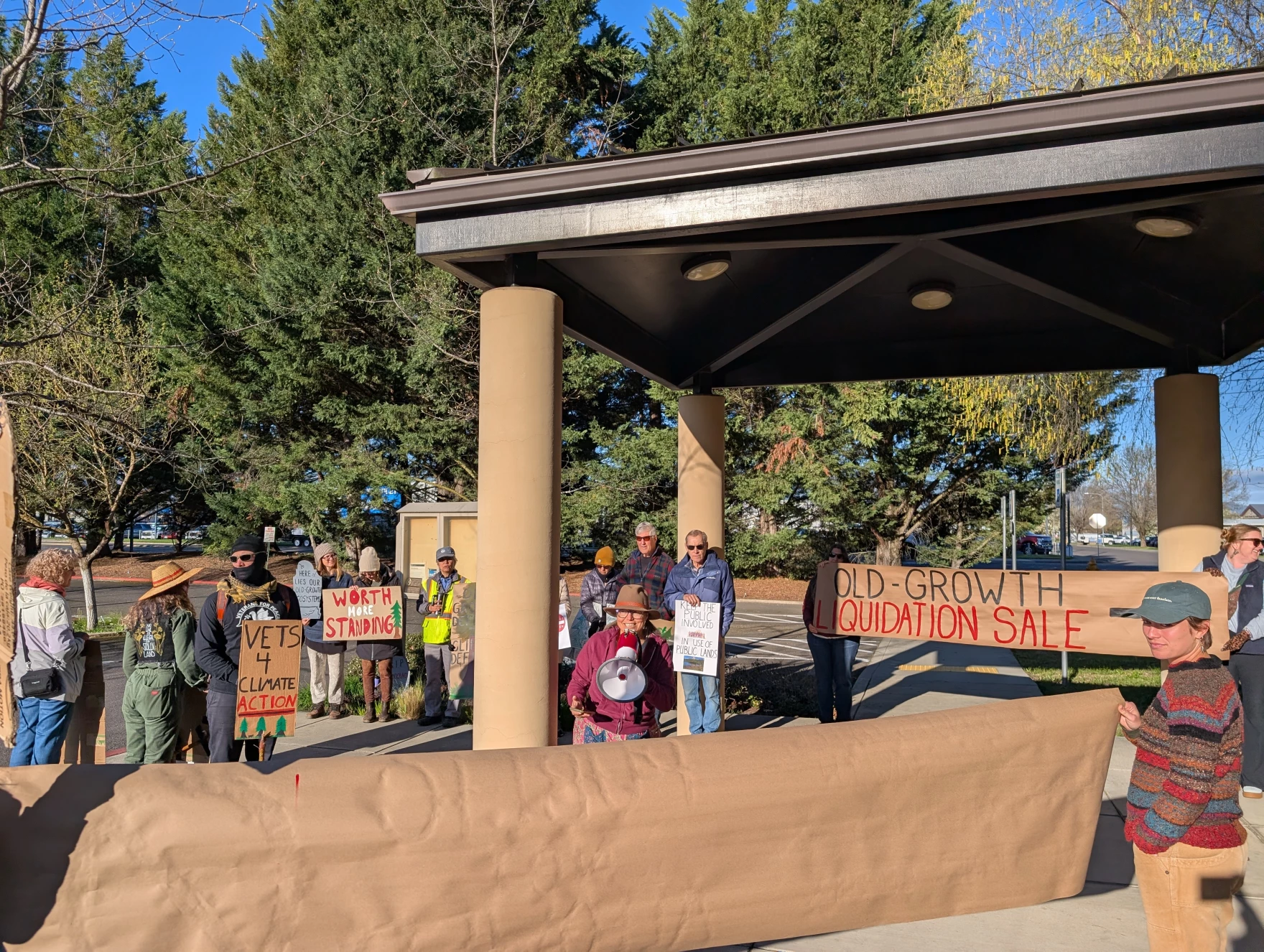
A legal battle is underway over a controversial logging project in southern Oregon, as environmental advocates challenge federal officials over wildlife survey methods used in the area.
Protest and Legal Action Against Logging Plan
Members of KS Wild and other environmental groups gathered outside the Bureau of Land Management office in Medford to protest a timber auction tied to the “Last Chance” project. The plan involves logging and wildfire mitigation across roughly 11,000 acres northeast of Grants Pass.
Activists argue the project threatens sensitive wildlife species, including the protected northern spotted owl and the northwestern pond turtle.
Core Dispute: Owl Habitat Findings
At the center of the lawsuit is whether the BLM accurately determined that the project area is not inhabited by northern spotted owls.
Attorney Sydney Wilkins, representing KS Wild, said there is evidence contradicting that conclusion. Audio recordings captured owl calls within the area, raising concerns that the agency’s findings may be flawed or improperly justified.
The group is seeking a preliminary injunction that would temporarily halt logging operations until the case is resolved.
Debate Over Survey Techniques
A key issue in the case is the method used to detect owl presence. The BLM relied on “call-back surveys,” where researchers mimic owl calls and listen for responses.
However, environmental advocates argue that this method is outdated and less reliable than passive acoustic monitoring (PAM), which uses recording devices to capture sounds over extended periods.
According to Wilkins, recent research suggests PAM is more effective, especially in areas where invasive barred owls may discourage northern spotted owls from responding to human-generated calls.
Despite these concerns, a wildlife biologist testifying for the BLM defended the agency’s approach during court proceedings.
Federal Agencies and Company Response
The U.S. Fish and Wildlife Service acknowledged the study referenced by environmentalists but stated it provided limited evidence regarding owl behavior changes.
Meanwhile, Murphy Company, which secured the first timber contract under the project, maintains it followed all legal notification requirements before beginning operations.
Disputes remain over the timeline of logging activities, with environmental groups alleging a lack of transparency from both the agency and the contractor.
Background and Policy Changes
This is the second lawsuit filed by KS Wild against the Last Chance project. A previous case was dropped in 2025 following regulatory changes to the National Environmental Policy Act that altered the legal landscape for such challenges.
Advocates argue those changes have reduced public oversight and environmental review standards, potentially allowing projects like this to proceed with less scrutiny.
What Happens Next
A court decision on whether to pause logging operations is expected in the coming weeks. The outcome could significantly impact how federal agencies assess wildlife presence and environmental risks in future logging projects.









Leave a Reply