

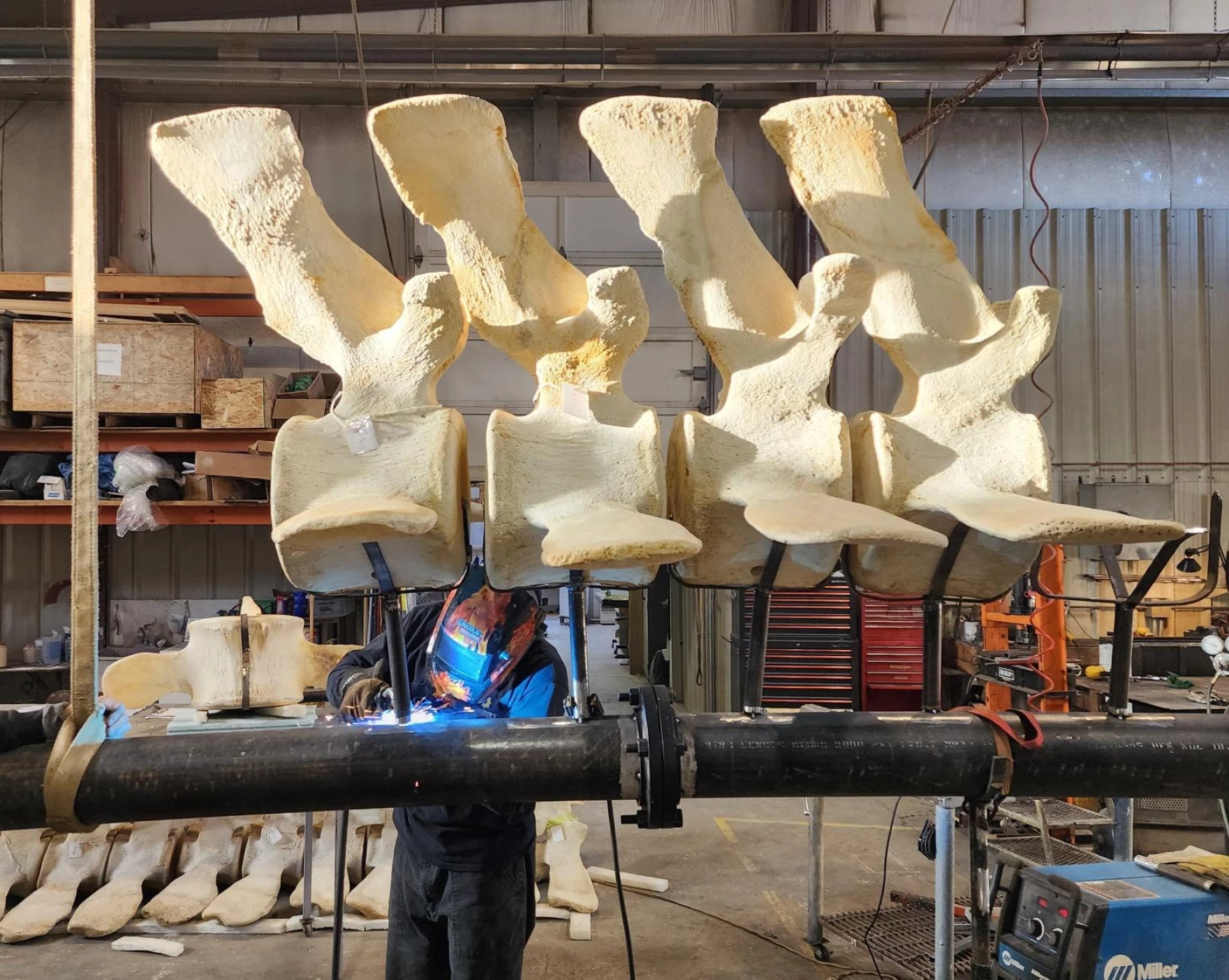
A massive blue whale that washed ashore on the southern Oregon coast in 2015 is set to complete its final journey this May, as its reconstructed skeleton is installed at the Hatfield Marine Science Center in Newport.
From Tragedy to Scientific Landmark
The nearly 70-foot-long male blue whale—the largest animal on Earth—was discovered dead under unclear circumstances. A detailed necropsy revealed multiple contributing factors, including elevated levels of domoic acid, a harmful marine toxin, and extensive physical injuries consistent with a collision involving a large vessel. Bite marks on the body also indicated scavenging activity after death.
What could have been the end of the whale’s story instead became the beginning of a long-term scientific and preservation effort.
Global Collaboration for Preservation
Following initial examination, the whale’s remains were transported to Newport, where scientists began a multi-phase preservation process. The bones were submerged in Yaquina Bay for over three years, allowing marine organisms to naturally remove remaining tissue.
Later, specialists at Dinosaur Valley Studios took on the complex task of cleaning, restoring, and reconstructing the skeleton. The project required collaboration with experts from multiple countries, including Japan, Iceland, Australia, Belgium, and the United States.
Researchers also faced unique challenges, such as identifying rare anatomical features and extracting large quantities of oil from the bones—an essential step to prevent long-term deterioration.
Scientific Insights and Challenges
The reconstruction process has highlighted how much remains unknown about blue whale anatomy and movement. Experts worked meticulously to ensure the final display accurately represents how the animal swims and feeds.
Interestingly, the project also revealed that scientific knowledge about some aspects of whale anatomy may still lag behind what is known about dinosaurs.
Final Installation in Newport
The skeleton is expected to be installed outdoors at the Hatfield Marine Science Center in mid-May, weather permitting. Once completed, the display will feature a dynamic pose, with the whale’s head angled as if diving for krill—its primary food source.
This installation aims to provide visitors with a lifelike representation of the whale in motion, enhancing both educational and visual impact.
A Lasting Legacy
The project, which has already exceeded initial cost estimates of $450,000, will include opportunities for public support, such as sponsorship programs to help maintain the exhibit.
Beyond its physical presence, the whale’s story continues to offer valuable insights into marine biology, conservation, and the challenges facing ocean ecosystems.
Researchers believe the exhibit will not only educate visitors but also inspire a deeper appreciation for the complexity and grandeur of marine life.












Dee
I remember when it washed ashore years ago and I plan to travel to Newport to view what all the talented and dedicated people have done to preserve and display the skeletal remains of such a magnificent creature still living in our waters today but seldom seen by most people.