

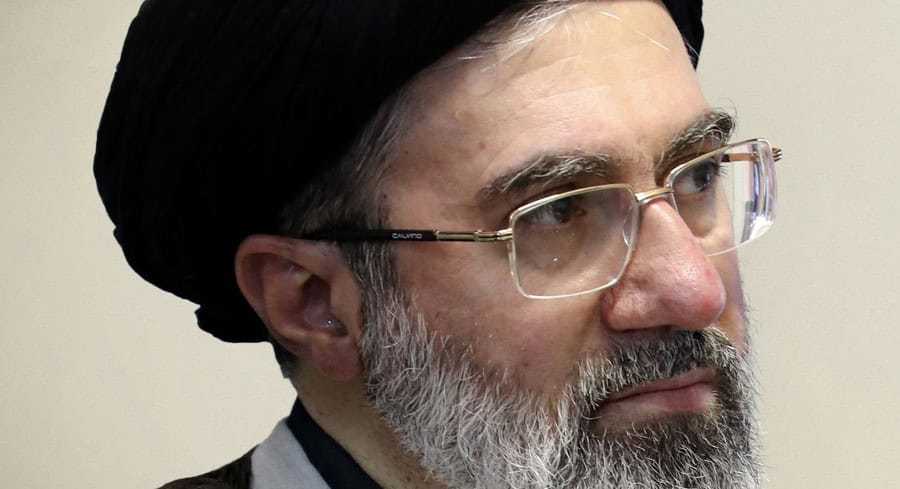
Iranian Supreme Leader Mojtaba Khamenei issued a stark warning to the United States and Israel on Saturday, declaring that any renewed military action against Iran would trigger retaliatory strikes with no geographical boundaries. The warning came even as regional mediators continued efforts to broker an end to the months-long conflict.
Khamenei delivered the warning following a meeting with senior military commanders, including armed forces chief of staff Ali Abdollahi, army chief Amir Hatami, and Revolutionary Guards commander Ahmad Vahidi. The gathering marked the first reported meeting between Khamenei and top defense officials since he assumed power following the death of his father, Ayatollah Ali Khamenei, in U.S.-Israeli strikes in February.
“If the enemies once again launch military or terrorist attacks, it is the armed forces of the Islamic Republic and the Iranian nation that will determine the time and conditions for ending them,” Khamenei stated in a message published on his Telegram channel. He directed commanders to prepare an “immediate, impactful and geographically unrestricted response” to any future threat.
The remarks arrived amid contradictory signals regarding the trajectory of the conflict. On Friday, President Donald Trump told reporters that the war with Iran is “going to end soon,” though he offered no elaboration. During recent campaign rallies ahead of Tuesday’s U.S. midterm elections, Trump also suggested the possibility of using military force to bring the conflict to a swift conclusion.
Qatari and Pakistani mediators convened in Doha on Saturday alongside an Iranian delegation to review a peace framework championed by U.S. Vice President JD Vance. Despite this diplomatic activity, Iranian Foreign Minister Abbas Araghchi firmly ruled out direct engagement with American officials.
“Currently, there are no plans for meetings with American officials, and any speculation to the contrary is merely media assumption,” Araghchi told Al Jazeera on Saturday, according to the state-run IRNA news agency. “We see no need to meet with the Americans at present, our conditions are clear, and the mediators continue their consultations regarding them.”
Araghchi acknowledged Washington’s outreach as a positive gesture but cautioned that “if Washington’s goal from Vance’s message is to stir up differences, it will be a new mistake added to its previous errors.”
Regional leaders simultaneously warned of severe consequences should hostilities resume. Speaking at a security forum in Bahrain, Saudi Vice Minister of Foreign Affairs Waleed ElKhereiji emphasized that governments across the Middle East are actively working to prevent further escalation.
“If you look at … the efforts that everybody is trying to do, the message is very clear. People in this part of the world want to bring peace back to the region,” ElKhereiji stated, while acknowledging that the ultimate outcome remains uncertain.
Egyptian Foreign Minister Badr Abdelatty, addressing the same forum, warned that a resumption of fighting would carry far-reaching consequences. “We are very confident that … the second round will be more dangerous, more destructive, and it will lead to nowhere,” Abdelatty said.
The diplomatic impasse follows months of sustained strikes that have significantly altered the U.S. military presence across the region. An Associated Press analysis of satellite imagery confirmed that more than 115 drone and missile strikes conducted by Iran or its allied militias damaged or destroyed structures at 26 military installations housing American forces through August.
The strikes initially targeted early-warning radar systems and aircraft hangars before shifting focus to supply warehouses and troop quarters, resulting in billions of dollars in equipment losses, according to satellite imagery and accounts from four regional officials. In response, the United States relocated aircraft, air defense batteries, and communication systems away from several Persian Gulf bases.
The most severe strikes occurred in Kuwait, where Ali Al Salem Air Base sustained at least 30 attacks, damaging 15 hangars, warehouses, and buildings near residential areas. At the adjacent Camp Buehring, strikes destroyed the majority of hangars along with a base gymnasium and exchange facility. American installations in Bahrain, Iraq, Jordan, Oman, Qatar, Saudi Arabia, and the United Arab Emirates were also targeted.
Tensions continued to mount on regional waterways and along neighboring borders. Admiral Brad Cooper, head of U.S. Central Command, stated on Friday that Iran’s navy had been destroyed and that shipping lanes through the Strait of Hormuz remained open. Tehran disputed this assessment, asserting that several commercial vessels struck sea mines along the route during the course of the week.
In Saudi Arabia, military forces intercepted a drone over the Riyadh region in the early hours of Saturday, according to coalition spokesman Turki al-Malki. Falling debris caused no injuries, and no group immediately claimed responsibility. However, Yemen’s Iran-backed Houthi movement has intensified strikes against Saudi infrastructure since fighting escalated in Yemen over the summer.




Leave a Reply