

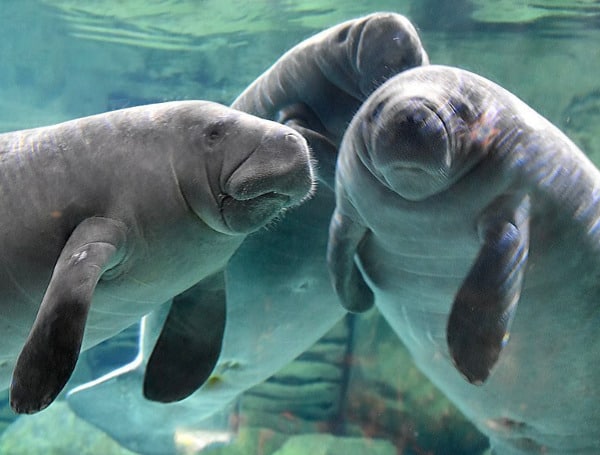
As fall temperatures cool Florida’s coastal waters, the state’s waterways begin filling with thousands of slow-moving, paddle-tailed migrants making their seasonal journey inland.
November marks the beginning of Manatee Awareness Month, signaling the annual migration during which thousands of Florida manatees depart open bays and travel toward natural warm-water springs, power plant discharge basins, and sheltered inland channels. In response, state wildlife officials are urging boaters to reduce their speed and maintain heightened vigilance on the water.
Despite their considerable size , adults routinely weigh between 800 and 1,200 pounds , manatees are remarkably difficult to detect from the helm of a vessel. They move slowly, remain submerged for several minutes at a time, and frequently blend into murky coastal currents.
“Manatees rely on warm water sites to survive the winter, seeking refuge at Florida’s springs, power plant discharge areas, and other warm water sites when water temperatures drop below 68 degrees Fahrenheit,” said Ashley LaVere, the manatee management program coordinator for the Florida Fish and Wildlife Conservation Commission (FWC). “Boaters and personal watercraft users may be more likely to encounter manatees as they make their way to their winter habitats, so awareness of how to keep manatees safe while on the water is key.”
Because watercraft strikes represent one of the most significant threats to manatee survival, wildlife officials advise boaters to observe the following precautions before departing the dock:
**Post a spotter:** Designate a passenger at the bow whose sole responsibility is scanning the water’s surface for snouts, backs, and tail flippers.
**Watch for “footprints”:** When a manatee dives beneath the surface, its broad tail leaves a distinctive circular swirl on the water.
**Reduce glare:** Polarized sunglasses assist operators in identifying shadows moving beneath shallow ledges and creek mouths.
**Obey posted zones:** Seasonal speed restrictions require vessel operators to reduce speed to idle or slow speed within designated high-traffic corridors.
Officials further caution winter sightseers that federal and state laws strictly prohibit touching, chasing, or feeding manatees. Approaching animals too closely can force them out of critical warm-water areas into open waterways, where cold stress can prove fatal within days.
Boaters and shoreline visitors who observe an injured, sick, or distressed manatee should refrain from handling the animal and contact the FWC Wildlife Alert Hotline immediately at 888-404-3922. Detailed maps of seasonal protection zones are available at MyFWC.com/MPZ.






Leave a Reply