

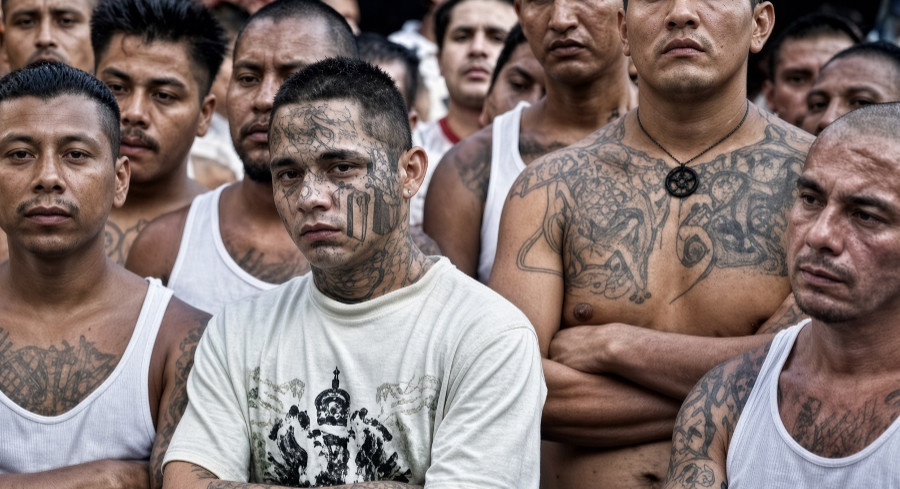
A federal appeals court recently rejected a Honduran mother’s bid for protection, along with her son, after they escaped to the United States because of recruitment threats from the MS‑13 gang.
On October 8, 2026, the U.S. Court of Appeals for the Eighth Circuit issued an opinion that upheld an order sending Maria Lily Alvarenga and her minor son, listed as E.D.B.A. in court records, back to Honduras. The court dismissed their asylum claims, requests for statutory withholding of removal, and relief under the Convention Against Torture (CAT).
Court records reveal that Alvarenga and her son crossed into the United States without inspection in April 2019. Border Patrol agents stopped them, and the Department of Homeland Security placed her in removal proceedings. At her initial hearing, an immigration judge ruled her removable after she confirmed Honduran citizenship and admitted she arrived at the border without a visa or passport.
During later hearings, Alvarenga sought relief, testifying that MS‑13 members repeatedly tried to recruit her son in Honduras. When the boy refused, gang members threatened to kidnap him and “do something” to his mother. She told officials she feared the gang would torture and kill her in retaliation. To avoid the gang, the boy stopped attending school, although court records note that MS‑13 never physically harmed Alvarenga or carried out the kidnapping threat, and she never reported the incidents to local police.
The immigration judge rejected her claims, concluding she failed to demonstrate persecution linked to a protected ground or to show that the Honduran government would permit torture. The Board of Immigration Appeals later dismissed her appeal.
Before the Eighth Circuit, Alvarenga argued that the immigration judge committed numerous procedural errors, violating her constitutional due‑process rights. The appellate panel disagreed, explaining that an immigrant must prove both a procedural defect and actual prejudice,meaning the outcome might have differed without the error. The court determined Alvarenga offered only a “speculative possibility” of lawful admission evidence and did not prove she deserved to stay.
The court also upheld the denial of her asylum and withholding of removal requests. Alvarenga claimed she belonged to a protected social group of “Honduran citizens who refused to comply with gang demands,” and asserted persecution based on an imputed political opinion of “perceived (imputed) resistance to the narco‑state and support of the current governmental structure.”
Relying on circuit precedent, the panel held that refusing gang recruitment or merely opposing criminal violence is too broad to qualify as a distinct social group or an imputed political opinion under federal immigration law.
Finally, the judges turned down Alvarenga’s CAT application. Federal regulations require an applicant to show that foreign officials would either commit or turn a blind eye to torture. Because Alvarenga never reported the threats to Honduran authorities, the court found no evidence that officials were aware of her situation or would condone harm to her family.





Leave a Reply