

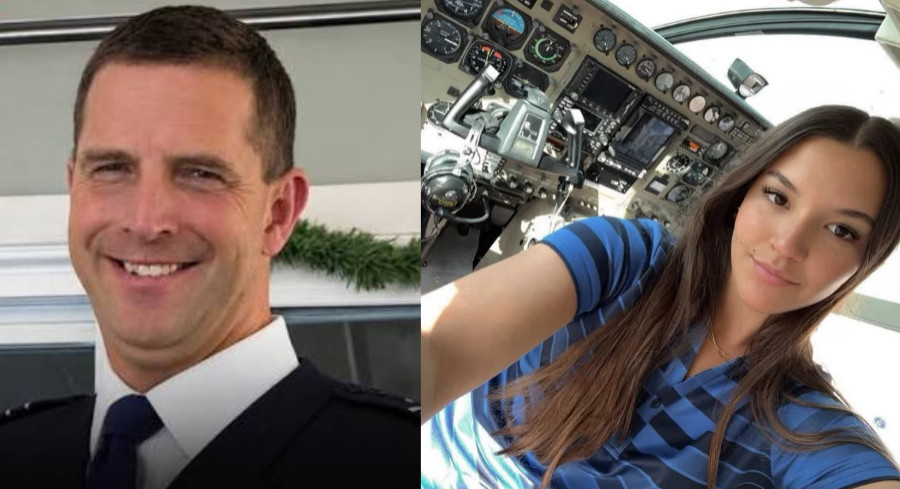
A veteran aviator has been identified as the captain of a private executive jet that broke apart and plunged into a South Florida neighborhood over the weekend, claiming the lives of nine people, including a prominent technology entrepreneur and his family.
Captain Jeff Gregory, 55, of Gilbertsville, Pennsylvania, was at the controls of the Learjet 60 when it crashed on Sunday afternoon near Cresthaven in Palm Beach County. This identification was confirmed through records and a statement released by his former employer, Allentown-based charter company East Coast Jets.
“We are deeply saddened to learn that Captain Jeff Gregory was among those who lost their lives in yesterday’s tragic aviation accident in Palm Beach,” East Coast Jets stated. “Jeff was a former member of the East Coast Jets team, having worked with us briefly in 2016 and 2017 before pursuing other opportunities. Our prayers go out to Jeff’s family, his fellow crew member, the passengers and everyone affected by this heartbreaking tragedy.”
Officials and family statements confirmed the identities of the eight others killed alongside Gregory. Co-pilot Nathalia Filgueiras perished in the cockpit, while the passengers included technology founder Adam Robinson, his wife Helen Sharp, their young son and daughter, family friends Rachael Reed and Charmi Fehr, and the family’s nanny, Anita Maria Cetina.
The twin-engine jet departed Austin-Bergstrom International Airport in Texas and was traveling to North Eleuthera Airport in the Bahamas when it became severely unstable at approximately 12:50 p.m. on Sunday.
Federal investigators revealed on Monday that the jet likely began disintegrating in midair before it struck the ground beside a roadway, exploding into a fireball and carving a deep crater near the entrance of a mobile home park.
“We do have some indication that the aircraft was breaking up before impact,” National Transportation Safety Board member Tom Chapman stated during a briefing. “We may find parts of the aircraft some distance away from the actual impact site.”
Chapman outlined the final moments captured on air traffic control audio, noting that the crew initially appeared composed while navigating rain and cloud cover beneath an active regional flood watch. They reported “light, clear ice” that remained manageable and described the turbulence as moderate, requesting permission from controllers to climb to 37,000 feet.
“Less than 30 seconds later, a transmission from the airplane announced a descent, followed by a mayday call,” Chapman said.
Cockpit audio captured by LiveATC.net reveals Filgueiras warning that the aircraft was descending at an extreme rate exceeding 20,000 feet per minute.
“We’re going to crash into the ground,” she said, before alerting that the aircraft had plummeted past 10,000 feet just as the transmission cut out. Flightradar24 tracking data indicated that the vertical descent rate briefly spiked above 32,000 feet per minute.
Despite the severe destruction caused by the crash, no individuals on the ground sustained serious injuries. Florida Governor Ron DeSantis noted during a public appearance that the wreckage had scattered across a considerable distance, describing the impact as catastrophic.
Recovery efforts remained slow and challenging on Monday as federal agents worked through rainy conditions. Investigators have not yet located a cockpit voice recorder and have not confirmed whether one was installed aboard the aircraft.
“The biggest obstacle we’re going to have is recovering the major wreckage from the impacted crater on the roadway,” said Timothy Monville, the NTSB investigator in charge.
Approximately 600 displaced residents from the surrounding community spent another night in emergency shelters while investigators documented scattered evidence across streets and private properties.
“Our concern right now is clearing the scene so that our residents can get back to normal,” Palm Beach County Commissioner Joel G. Flores said. “We don’t really have a timeline as to when they are going to be able to comb through all the evidence and do everything they need to do, and that leaves our community looking for answers.”


Leave a Reply