

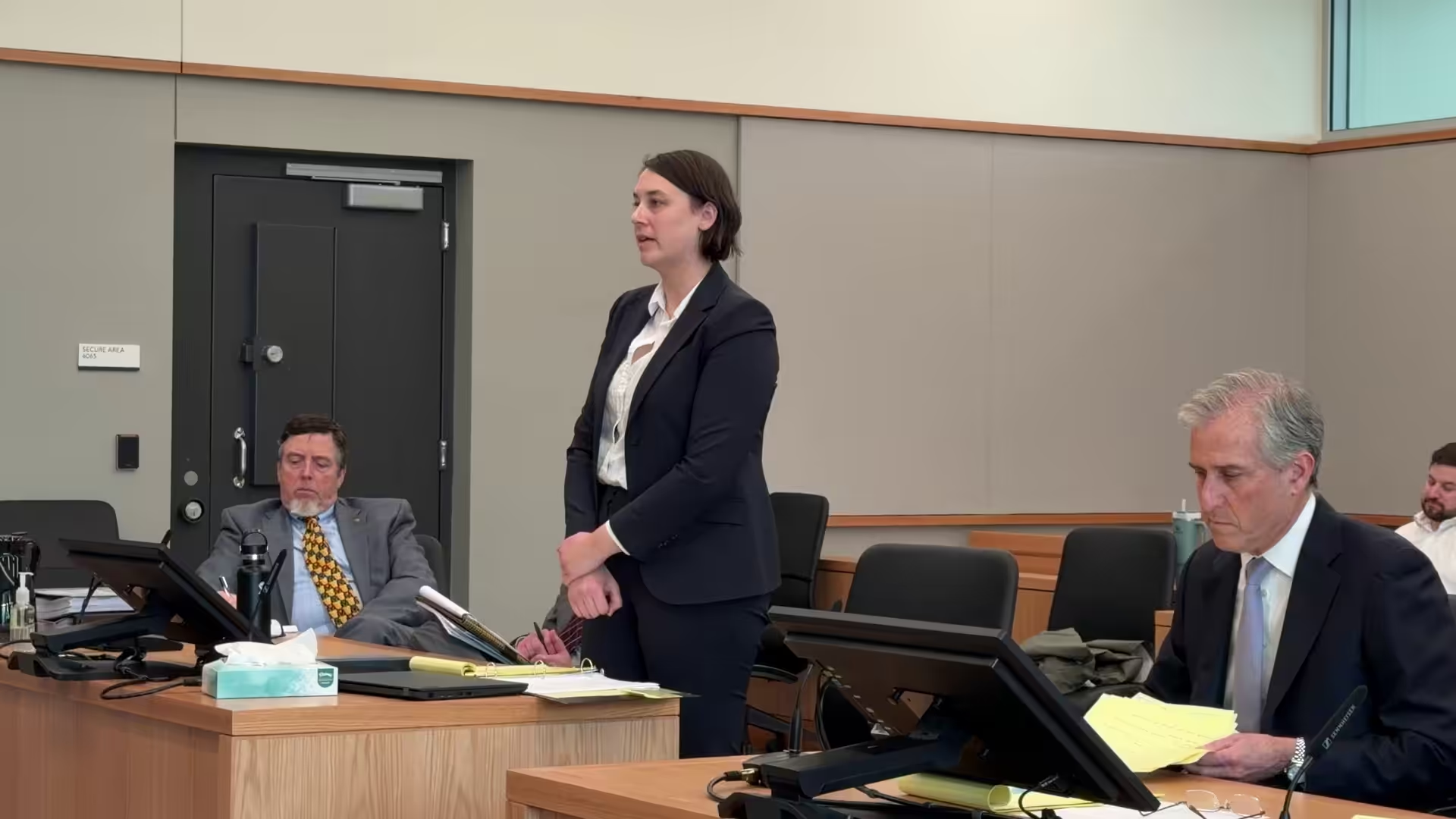
Public defenders in Oregon say they will take their legal battle over attorney caseload limits to the state’s highest court after winning a key ruling from a county judge.
In February, Michael Wetzel ruled that Oregon Public Defense Commission must remove contract language that could force defense attorneys to take more cases than they believe they can ethically handle. The decision came after two nonprofit defense organizations argued that the state’s contracts effectively imposed a quota system on lawyers.
The lawsuit was filed by Public Defender of Marion County and Southwest Oregon Public Defender. Leaders of the groups said mandatory caseload requirements risked compromising attorneys’ ability to properly represent their clients.
Shannon Wilson said the ruling allows attorneys to refuse additional cases if accepting them would prevent them from adequately serving existing clients.
According to Wilson, the decision ensures defendants will receive more attentive legal representation, giving attorneys time to investigate cases, conduct research and properly prepare for trial.
However, the ruling currently applies only to the two organizations involved in the lawsuit. Public defenders say a broader statewide policy would likely require clarification from the Oregon Supreme Court.
Wilson said both sides could potentially ask the high court to review the case to address larger questions about the constitutionality of Oregon’s public defense system.
One major issue is funding. Ensuring attorneys maintain manageable caseloads would likely require additional state spending. Oregon’s public defense budget has already nearly doubled—from about $314 million during the 2017–2019 budget cycle to roughly $624 million at current levels.
The debate comes amid a broader public defender shortage in Oregon. Courts have struggled with thousands of criminal cases lacking legal representation.
A recent ruling by the Oregon Supreme Court in State v. Roberts added pressure to the system. The court ruled that prosecutors must provide defendants with attorneys within 60 days for misdemeanor cases and 90 days for felony cases, or the charges must be dismissed.
Following that decision, about 1,500 cases were thrown out because defendants had not been assigned lawyers within the required timeframe. Prosecutors can refile those charges, but the clock resets.
State officials say the number of unrepresented defendants is slowly declining—from nearly 4,000 cases in January 2025 to about 2,500 cases by early 2026.
Still, Wilson said the legal battle has taken a toll on her organization. Because the group refused to sign the new contract while challenging it in court, it temporarily stopped receiving state payments for new cases.
As a result, the Public Defender of Marion County lost roughly half of its workforce.
Despite the setback, Wilson said the organization is rebuilding and hopes the case ultimately leads to clearer statewide rules that protect defendants’ constitutional right to effective legal representation.










Leave a Reply