

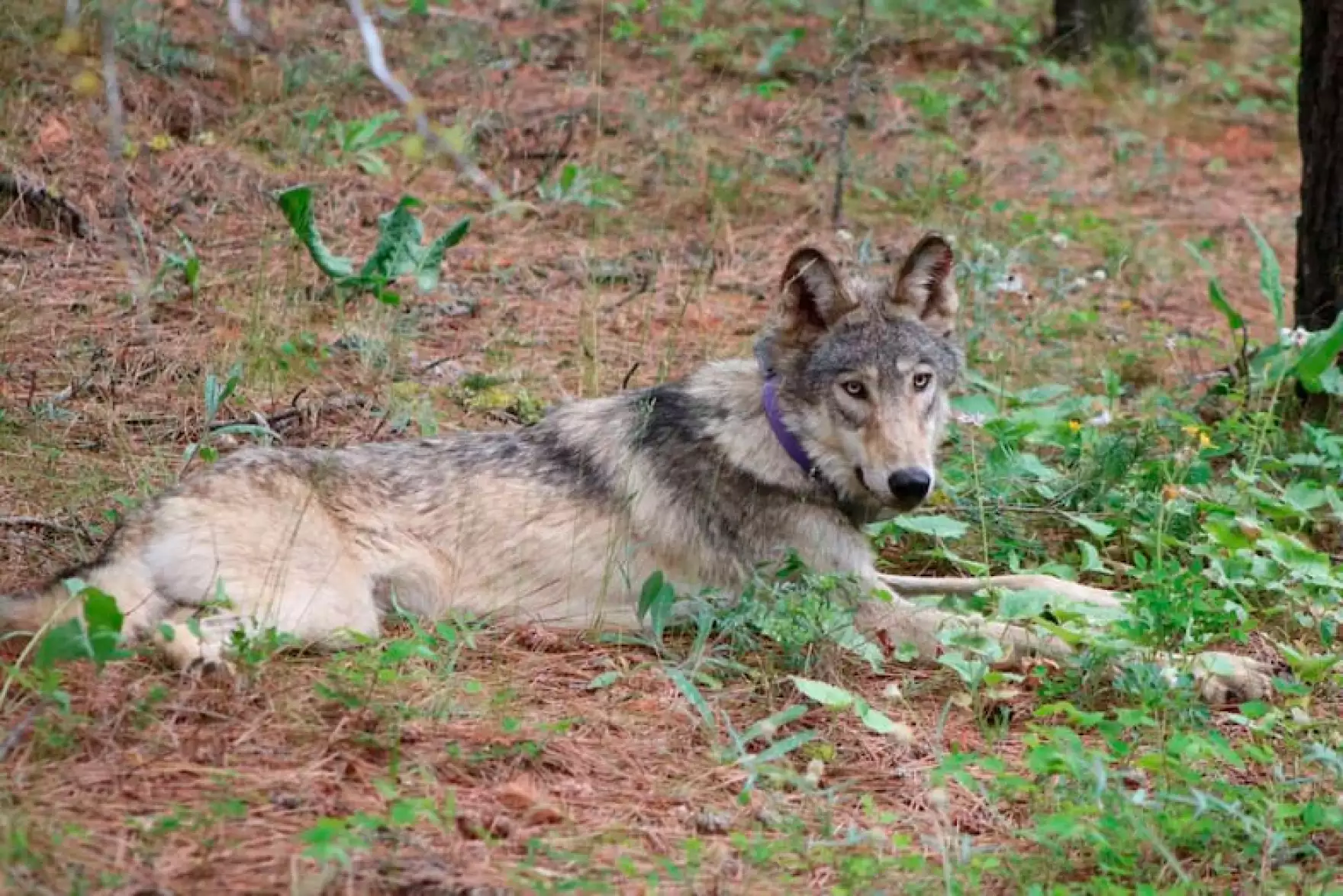
A federal wildlife control program accidentally killed two federally protected gray wolves in southern Oregon last summer, according to a newly released state report — raising serious concerns among conservation groups.
The incident was disclosed in the latest annual wolf report from the Oregon Department of Fish and Wildlife, where it was briefly mentioned despite its significance. Officials say the killings occurred during a predator control operation carried out by Wildlife Services, a branch of the United States Department of Agriculture.
The agency had reportedly been targeting coyotes when the wolves were mistakenly killed.
One of the animals, identified as CA102, was a collared 2-year-old male that had migrated from Northern California. The wolf had been linked to livestock attacks in Klamath County before it was killed on July 31, 2025.
The second wolf has not been fully identified, and key details about the incident remain unclear.
An investigation is now underway by the U.S. Fish and Wildlife Service, though officials have not released further information.
Conservation groups have strongly criticized the incident, questioning how trained personnel could confuse wolves with coyotes — animals that differ significantly in size and appearance. Adult wolves can weigh up to 100 pounds, while coyotes are typically much smaller.
Critics also renewed scrutiny of Wildlife Services, a controversial federal program that removes or kills large numbers of animals each year at the request of ranchers and farmers. In 2023 alone, the agency reported killing more than 155,000 animals in Oregon, with coyotes making up the majority.
Killing a federally protected species is a violation of both state and federal law, adding further weight to the investigation.
Despite the incident, Oregon’s wolf population continues to grow. The state counted 230 wolves in 2025, marking a 13% increase from the previous year. However, experts warn that the loss of breeding wolves — particularly in western Oregon, where protections remain in place — could slow recovery efforts.
Wildlife advocates say the deaths may have broader consequences, including the possible loss of a new wolf pack.
The case is expected to draw further attention as the Oregon Fish and Wildlife Commission reviews the report in upcoming meetings.









Leave a Reply