

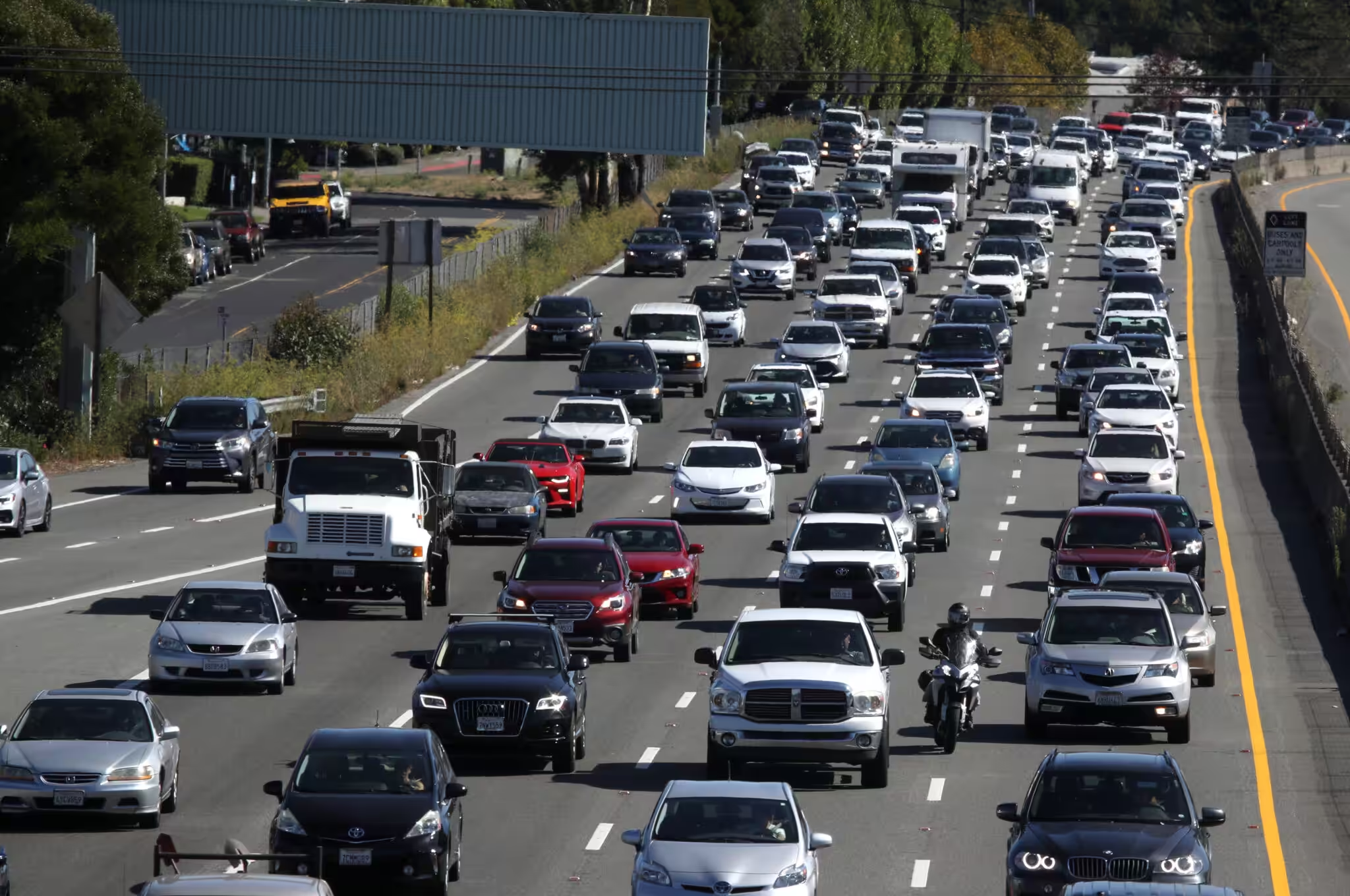
Motorcyclists are pushing Nevada lawmakers to legalize riding between vehicles during stopped or slow-moving traffic.
Riders and advocates spoke before the interim legislative committee on growth and infrastructure Tuesday, stressing that lane filtering is different from lane splitting. Lane splitting involves motorcycles moving between vehicles traveling at higher speeds, while lane filtering allows riders to move through stopped or slow traffic. Nevada currently bans both practices.
Supporters argue that lane filtering lowers the risk of rear-end crashes and improves safety for both riders and drivers.
“We all know motorcycles have a much smaller visual profile than surrounding vehicles, making riders easy to overlook. They can virtually disappear,” said Jessica Begnal, president of Motorcycle Rights for Nevada. “In many accidents, drivers often state, ‘We didn’t even see them.’ And we actually believe them.”
Begnal showed lawmakers a photo taken by a “four-wheeled supporter” that demonstrated how difficult it can be for drivers to spot a motorcycle stopped behind another vehicle, especially at night or when fatigued.
She explained that lane filtering allows riders to “jump the line” at traffic lights, making them more visible and improving safety for everyone on the road.
“Even a little fender bender or low-speed rear-end collision can result in catastrophic injuries or fatalities” for motorcyclists, Begnal added.
Longtime motorcycle rider Brandon Venturo said lane filtering is “not about getting special treatment” but about giving riders safer options.
“Motorcycles aren’t like passenger vehicles,” he said. “There’s no bumpers, crush zones or airbags. There’s nothing separating the rider from the impact. And when traffic stops abruptly, it can leave the rider in a very exposed condition.”
Another local rider, Cheryl Guanzon, testified that she had recently stopped in traffic when she noticed a vehicle approaching from behind that did not appear to be slowing down.
“I moved out of the way in time, but many riders are not that lucky,” she said.
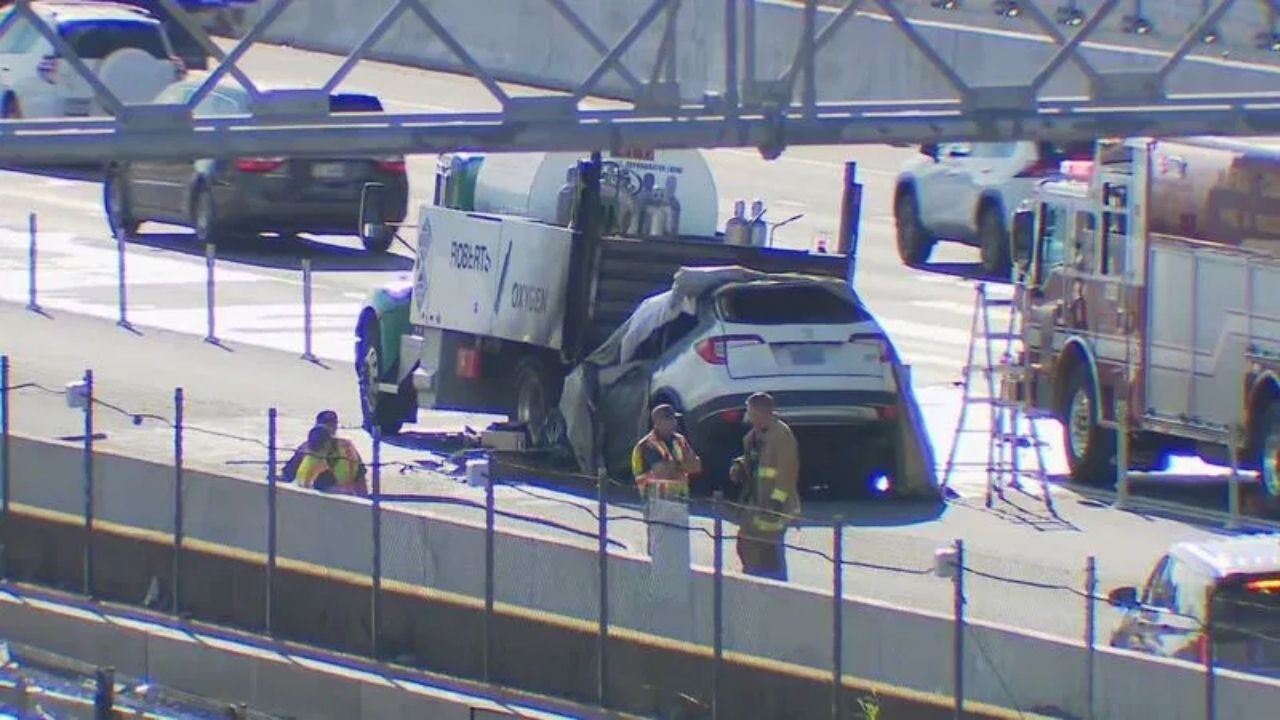
Guanzon and several other riders pointed to a deadly crash in Southern Nevada in early April that claimed the life of 48-year-old Josh Barber, a father of five. Authorities said Barber died after a Jeep Renegade slammed into his motorcycle when the driver failed to stop for traffic. He was pronounced dead at the scene, and the Jeep driver was later arrested on suspicion of impaired driving.
A Jeep also rear-ended the Kia Telluride that Barber had been stopped behind. The driver of the SUV and one of two juvenile passengers suffered minor injuries.
“Lane filtering would have saved Josh’s life,” said Barber’s friend, David Sampson.
Sampson told lawmakers that whenever a vehicle stops behind his motorcycle at a red light, he flashes a peace sign as a gesture of appreciation.
“I don’t think anyone ever sees it,” he said, “but it’s important to me I shoot them a little nod or peace sign and thank them for protecting me when I can’t protect myself.”
Miguel Williams, a Motorcycle Foundation Safety rider coach and motorcycle safety specialist at the College of Southern Nevada, said lane filtering can also reduce riders’ exposure to extreme heat. He noted that hot asphalt, vehicle exhaust and helmets can worsen already dangerous temperatures.
“When done correctly this is not reckless riding,” Williams said about lane filtering.
Nevada lawmakers previously considered legalizing lane filtering in 2013, but the proposal failed to pass, according to a legislative staff memo presented to the committee.
Among western states, Utah legalized low-speed lane filtering in 2019, followed by Arizona in 2022. California approved the practice in 2016. Idaho and Oregon, Nevada’s other neighboring states, still prohibit it.
Motorcycle Rights for Nevada is now urging lawmakers to back a bill allowing lane filtering when traffic is stopped or moving slowly. Details — including whether motorcycles should be limited to 25 mph or restricted to traveling 10 to 15 mph faster than surrounding traffic while filtering — would be worked out during the legislative process.





Leave a Reply