

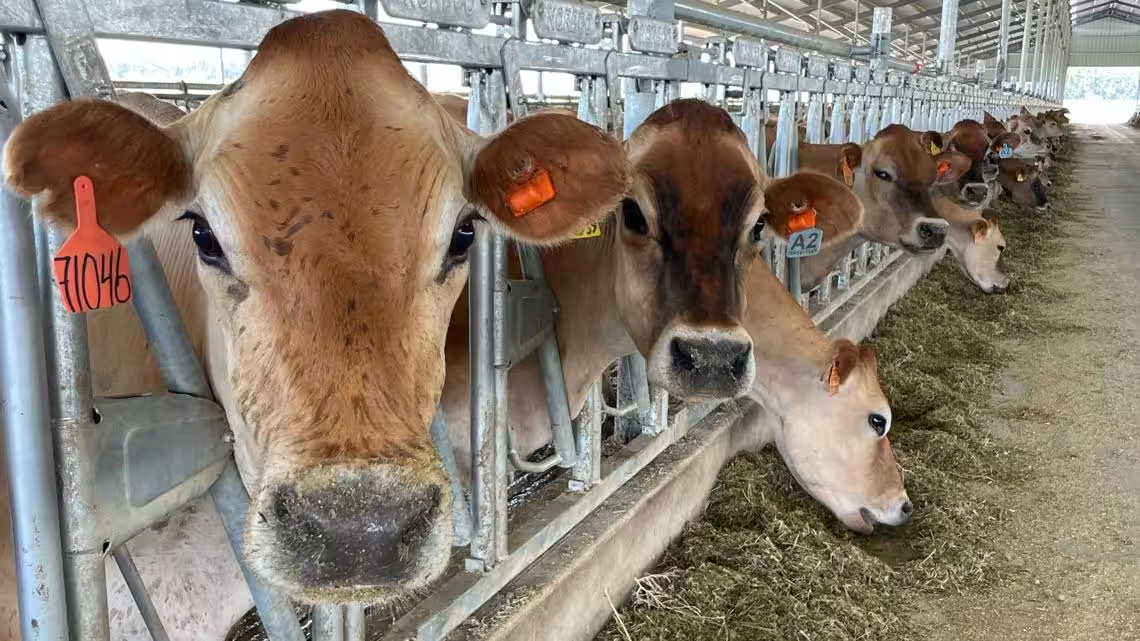
DAYTON, Ore. — Activity is nonstop at Forest Glen Jerseys Farm in Dayton.
“This is what’s called a free-stall barn, so the animals are free to lay wherever they want. They’ve got mattresses,” farmer Robert Kircher said while giving a tour of the barn.
“A lot of times these cows would be on pasture on grass. Whereas right now, today, with it being so hot, we’ve got cows inside,” he said. Kircher and his brother help manage the farm.
“This operation runs almost 24/7 to where, you know, you can’t stop,” Kircher said.
He said each Jersey cow consumes about 94 pounds of feed daily and produces around 57 pounds of milk every day.
Kircher said the farm cares for roughly 2,500 cows across two locations covering nearly 3,000 acres.
“We have all Jersey cows, which are known for high butterfat, high protein and high components. A lot of our milk goes to Nancy’s Yogurt or to Costco for Costco Organic A2 milk,” he said.
The farm is one of 130 dairy operations in Oregon, all of which contribute to the state’s economy.
“The whole milk industry in Oregon supports 41,000 jobs, whether it’s people that work for the farm, people that work in hauling, or in distribution and stuff,” Kircher said.
RELATED: Third-generation Oregon dairy farmer focuses on sustainability
“We employ close to 50 employees full time. So it takes a lot of work,” he said.
“We’ve got a lot of guys here that have been working for us 25, 30 years now, and we take a lot of pride in that.”
Kircher has worked on the farm since he was 13 years old and said dairy farming comes with its challenges.
Farmers often absorb rising expenses, including fuel, labor, and fees, because Federal Milk Marketing Orders set minimum milk price regulations.
Recently, however, the outlook has improved due to growing demand for protein. Kircher said consumers are returning to cow’s milk after plant-based alternatives gained popularity.
For Kircher, caring for the cows remains the most important part of the business.
“Top priority is cow care, right? And cow health. If you don’t take care of your cows, you’re not going to get decent milk production, high-quality milk, and really if we’re not producing milk, we’re not in business,” he said.
Kircher added that the operation also prioritizes sustainability. Some feed ingredients come from other food and beverage producers, including breweries. Manure is either used on the farm or sold to vineyards and other operations to help fertilize crops.










Leave a Reply