

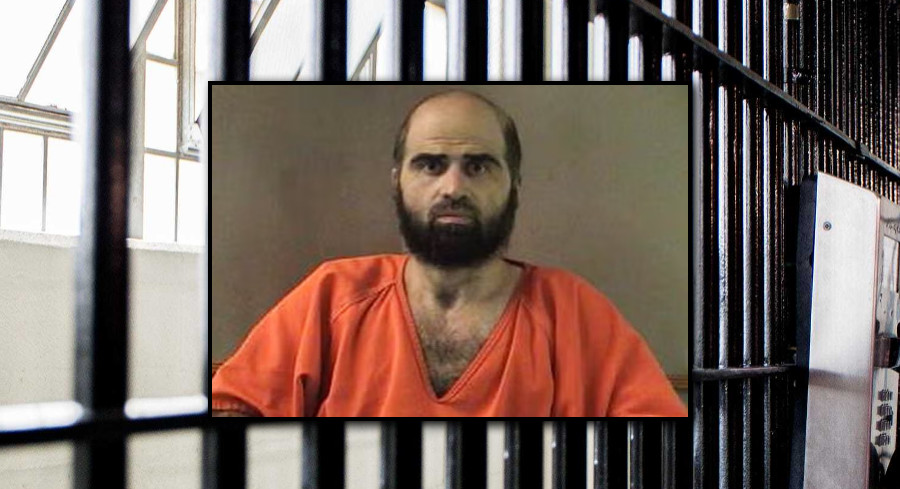
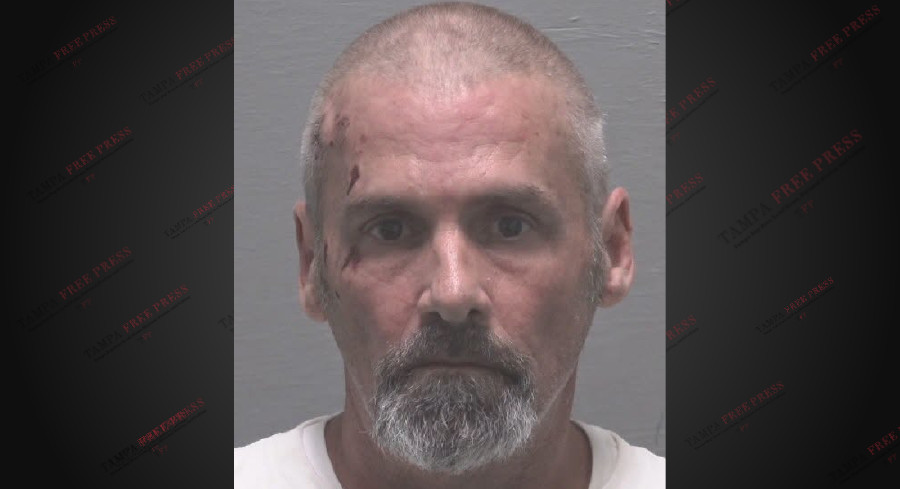
Secretary of War Pete Hegseth announced that the U.S. will execute convicted Fort Hood shooter Nidal Hasan by firing squad and stream the event live for anyone who wishes to watch.
The Department of Defense confirmed the plan in an official letter, stating that a livestream will be available to the public on December 3 at Fort Hood, Texas.
This will be the first execution carried out by the United States military in more than six decades. The last service member executed was Army Private John Bennett, who was hanged in 1961 after a court‑martial conviction for rape and attempted murder of a minor. Hasan’s execution also marks the military’s first use of a firing squad since World War II.
Hasan, a former Army psychiatrist, was found guilty of killing 13 people and wounding dozens more during a mass shooting at a Fort Hood medical processing center on November 5, 2009.
A military jury sentenced him to death in 2013. The sentence survived several appeals, and Hasan exhausted his final appeal in 2025. After that ruling, Hegseth urged President Donald Trump to give final approval for the death penalty to proceed.
During his court‑martial, Hasan testified that he carried out the attack to stop American soldiers from deploying to Afghanistan and to protect fellow Muslims. He had been slated for deployment to Afghanistan around the time of the shooting.
Hegseth framed the public execution by firing squad as a direct response to the nature of the attack.
“It was a radical Islamist attack in uniform inside the ranks, and so he’s going to get a firing squad of soldiers, as it should be, and we’ll make sure that people are able to watch it, that it’s public, because people need to understand there’s serious consequences for these types of things,” Hegseth said.
When reporters asked whether Hasan had submitted any final requests or tried to contact Trump, Hegseth replied, “Don’t care. We’ll see him on December 3.”
Capital punishment has a long, strictly regulated history within the American armed forces, dating back to the Revolutionary War when General George Washington authorized executions for desertion and treason. Throughout the 19th and early 20th centuries, military executions were relatively common during wartime, typically carried out by hanging or firing squad for offenses such as mutiny, desertion in the face of the enemy, and murder.
During World War II, the military executed more than 140 soldiers, almost all by hanging, with Private Eddie Slovik being the only service member shot by a firing squad for desertion since the Civil War. After the Uniform Code of Military Justice (UCMJ) was established in 1950, procedural safeguards increased, requiring presidential confirmation for any military death sentence.
Executions fell sharply after the Korean War and ended entirely after Bennett’s hanging at the U.S. Disciplinary Barracks at Fort Leavenworth, Kansas, in April 1961. In the decades since, courts‑martial have occasionally handed down death sentences, but military executions remain extraordinarily rare because of extensive appellate reviews and the necessity of executive branch sign‑off.



Leave a Reply