

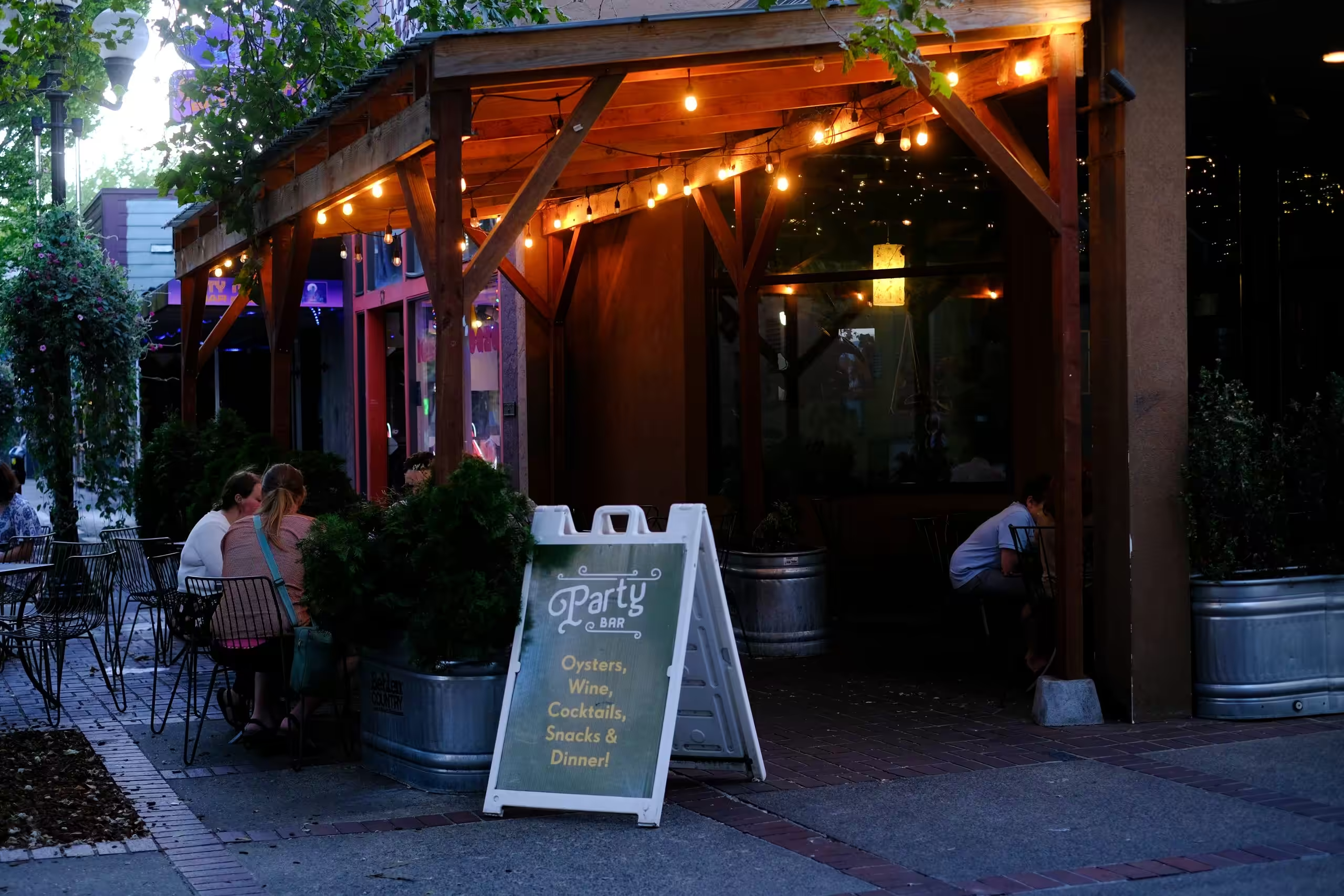
On Wednesday, Aug. 26, Party Bar joins more than 100 restaurants worldwide for Pay What You Can Day, a global initiative that hands pricing power to guests. Drinks will be billed at full price, but diners get to decide what to pay for their food. The event centers on food access, mutual trust and community.
Party Bar’s signature burger typically runs $20, but on Aug. 26, customers can pay $10, $30, $1 , whatever feels right to them.
That applies to every dish at the downtown Eugene restaurant at 55 W Broadway, from the crab cake po’boy and cherry and burrata salad to the half-pound shrimp plate.
Party Bar is one of more than 100 restaurants globally dropping food menu prices for Pay What You Can Day. As the sole participating Oregon restaurant, it joins recognized spots like El Padrino in Nigeria and the Michelin-starred Palestinian restaurant Albi in Washington, D.C.
Letting customers name their price is new territory for Party Bar owners Tiffany Norton and Mark Kosmicki, though feeding people regardless of their means isn’t. The couple has put on fundraising dinners for healthy food access causes and offered free meals during the COVID-19 pandemic.
“That would be exciting if those folks came out,” Norton said.
The concept began at Masala y Maíz in Mexico City. Co-chefs and co-owners Saqib Keval and Norma Listman , friends of Norton and Kosmicki , set out to eliminate financial obstacles so more diners could experience their Michelin-starred kitchen.
The pair has run “paga lo que puedas” (pay what you can) days at Masala y Maíz for years, built on a straightforward promise: Today, everyone is welcome to dine here.
Last year, Keval and Listman opened the annual event to other restaurants. More than 20 took part, and participation has jumped fivefold this year.
Here’s how Pay What You Can Day works at Party Bar:
The restaurant won’t be taking reservations that day, and beverages will be charged at normal prices.
Guests can order any dishes they like. Participating restaurants are urged to offer their full food menu and keep it “as beautiful as always,” Norton said.
Rather than listing a total, the bill arrives with blank spaces for diners to fill in both the food charge and tip. People pay what they can afford or what they feel the meal and service deserve.
There’s no minimum payment required. According to the event’s website, the approach has “not resulted in financial loss and has often generated similar revenue to a regular day of service” for participating restaurants.
Keval told Oaklandside, “It turns out, some people will pay more while others pay less.”
The pay-what-you-can approach isn’t new. Museums, nonprofits and other groups have used flexible pricing for decades.
Nationally, Panera Bread ran five pay-what-you-can spots called Panera Cares, including one in Portland. Each location suggested donation amounts instead of setting prices. In 2019, after being acquired by a private equity firm, the chain shuttered its last Panera Cares location after nine years, citing financial difficulties, safety problems and reported friction between patrons and staff.
Earlier this year, a Minneapolis cafe frustrated by immigration enforcement and other federal actions rebranded from Modern Times to Post Modern Times and shifted to a “free and donation-based restaurant” model.
After six months of profitability, the cafe paused operations in July to restructure. It recently said it would reopen as a no-tipping restaurant, reinstating menu prices while setting aside 25 free meals daily.
Other mission-driven payment setups include Acorn Community Cafe in Eugene, where patrons can help fund a free meal for someone else through the vegan cafe’s Pay it Forward program.
Back at Party Bar, Norton said she’s eager to see how the restaurant’s first pay-what-you-can service unfolds.
“I always thought it was so cool,” she said.










Leave a Reply