

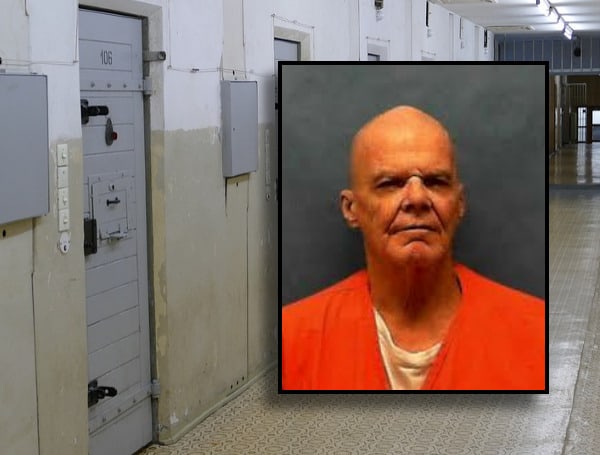
Governor Ron DeSantis of Florida withdrew the death warrant for 74‑year‑old inmate William Lee Thompson, scrapping the execution that had been slated for Tuesday, Oct. 13.
Thompson earned his conviction for the 1976 torture and murder of 23‑year‑old Sally Ivester in North Miami. Now he battles advanced dementia, heart disease and sepsis, prompting DeSantis to pull the warrant amid growing doubts about his mental fitness.
DeSantis first placed a temporary stay in September, allowing three court‑appointed psychiatrists to assess Thompson. The state has kept those findings under wraps, and, as the Miami Herald reports, his lawyers have consistently argued that his deteriorating brain function makes him legally incompetent for capital punishment.
Supreme Court precedent bars states from executing anyone who cannot grasp why they face death. In an emergency petition, Thompson’s attorney Brittney Lacy described his decline, noting his severe confusion, inability to name the current president, and failure to answer simple questions.
Grace Hanna, executive director of Floridians for Alternatives to the Death Penalty, praised the governor’s move, saying, “executing Thompson would violate the Eighth Amendment’s protection against cruel and unusual punishment.”
For almost fifty years, Thompson’s case has churned through Florida courts, enduring multiple trials, resentencings and appeals. His former co‑defendant, Rocco James Surace, died in prison in 1993.
Thompson was slated to be one of two executions on Oct. 13. The other, James Robertson, will still receive a lethal injection at noon for a separate 2008 murder.
EARLIER REPORTING: On Thursday, the Florida Supreme Court cleared the path for Thompson’s execution, rejecting arguments that his frailty and illness made lethal injection unconstitutional and dismissing separate challenges on clemency and intellectual disability.
In a per curiam opinion, the justices upheld a Miami‑Dade circuit court order that swiftly rejected Thompson’s post‑conviction relief motion, denied his habeas corpus petition, and refused his request for a stay of execution.
Thompson received the death sentence for the April 14, 1976 kidnapping, sexual battery and torture‑murder of Sally Ivester in a Miami motel. Governor DeSantis signed an active death warrant on Sept. 11, setting the execution for Oct. 13 at 6 p.m. He briefly halted the warrant on Sept. 17 so a three‑psychiatrist panel could assess Thompson’s mental competency. Thursday’s ruling, however, swept away the last judicial challenges to his sentence and execution method.
Lawyers from Capital Collateral Regional Counsel‑South asked the high court to step in, contending that Thompson’s severe health decline renders lethal injection cruel and unusual under the Eighth Amendment.
Court filings list Thompson’s diagnoses: advanced dementia, systolic congestive heart failure, stage‑three kidney disease, sepsis, and severe cachexia that left him at 99 pounds. Defense records reveal he was found unresponsive in his cell on Aug. 17, spent weeks in outside hospitals, and underwent colostomy and ileostomy surgeries to address a necrotic sacral ulcer exposing bone. He returned to death watch with 17 abdominal staples, three head staples from a wheelchair fall, and compromised veins that staff repeatedly struggled to access.
Thompson’s lawyers warned that laying him flat on an execution gurney would cause excruciating pain to his exposed spinal wound and broken ribs. They also argued that Florida’s lethal‑injection mix,etomidate, rocuronium bromide, and potassium acetate,could trigger flash pulmonary edema, keeping him conscious while fluid drowns him because of his heart and lung failure. Their filings suggested a firing squad as a humane alternative.
The Supreme Court dismissed the Eighth Amendment challenge to lethal injection. Writing for the court, the justices explained that an inmate must demonstrate that the protocol poses a substantial risk of serious harm and that a viable, accessible alternative would markedly lower that risk.
The justices noted that Thompson contested the lethal‑injection protocol in his primary brief but only raised the firing‑squad issue in his reply brief. Florida appellate rules prohibit introducing new arguments in a reply, so the claim was procedurally barred, leaving the circuit court’s denial untouched and bypassing the medical discussion.
The justices also rejected Thompson’s Fourteenth Amendment due‑process claim, noting he never received clemency proceedings for his final 1989 death sentence. He did, however, undergo a clemency review in 1982 under an earlier sentence that was later overturned before his 1989 resentencing.
The court held that executive clemency lies solely with the governor and that state precedent does not mandate a new clemency review after each resentencing. Citing the Ted Bundy case, the opinion confirmed that the state need not hold repetitive clemency hearings for separate death sentences. The justices also noted that DeSantis’ warrant expressly recorded that clemency had been considered and found unsuitable.
In his habeas petition, Thompson renewed his argument that intellectual disability bars his execution, referencing earlier IQ scores and the Supreme Court’s 2014 Hall v. Florida decision.
The justices declined to revisit the issue, noting that Thompson’s intellectual‑disability claims were fully litigated and rejected in 2009 and 2022. Their 2020 precedent holds that Hall does not apply retroactively to cases finalized decades earlier, and they stressed that habeas petitions cannot function as a second appeal.
Chief Justice Carlos G. Muñiz, along with Justices John D. Couriel and Jamie R. Grosshans, joined the per curiam opinion. Justice A.S. Tanenbaum filed a separate concurrence, emphasizing that clemency is purely an executive grace act without enforceable due‑process rights. Justices Renatha Francis and Meredith Sasso concurred in the outcome.
Justice Jorge Labarga partially concurred and partially dissented, reiterating his long‑standing belief that the 2020 decision wrongly held that landmark intellectual‑disability protections should not apply retroactively.
The court ordered immediate issuance of its mandate and barred any rehearing motions, leaving Thompson’s fate dependent on the governor’s pending administrative decision regarding his mental sanity.






Leave a Reply