

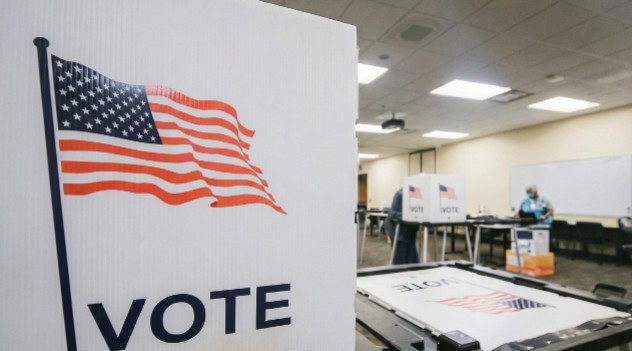
As voters prepare to cast their ballots, the contest for Capitol Hill is being shaped less by the occupant of the White House and more by the rising cost of everyday goods. Democrats currently hold a national polling advantage, while Republicans work to defend their position ahead of election day.
According to a recent election-eve analysis, Democrats lead Republicans 51% to 43% on the generic congressional ballot. That eight-point margin positions Democrats to reclaim the House of Representatives, while control of the Senate remains extremely close.
Nevertheless, election analysts urge caution against treating late-stage surveys as a definitive outcome. Pre-election polling has historically fallen short of accuracy, at times undercounting key voting blocs or failing to anticipate actual turnout in the unpredictable environment of midterm elections. Individual candidates frequently outperform national trends, leaving both parties focused on final returns rather than headline polling figures.
President Donald Trump has called on his supporters to mobilize in large numbers, urging them on the campaign trail to “pretend, please, that I’m on the ballot.” However, survey data suggests that voters are responding more to economic pressures than to political loyalty. Nearly 60% of voters identify the cost of living as a top priority influencing their decision, followed closely by energy bills and health care costs at 48% each. Only 42% indicate that the president himself is a primary consideration as they head to the polls.
Even within his own party, the president’s influence appears to have weakened relative to previous midterm cycles. Only 43% of Republicans report thinking “a lot” about Trump when weighing their vote, a sharp decline from 57% in 2018. While half of Republican voters continue to strongly support his performance, Trump’s overall approval rating sits 15 points underwater, approaching a second-term low.
This disconnect has undermined the traditional Republican advantage on fiscal competence. Democrats now lead by 10 points when voters are asked which party they trust more to manage the economy, and by 18 points on the issue of health care. By comparison, Republicans held a six-point economic edge at this same point during the 2018 midterm cycle.
With the House appearing likely to change hands, election-night attention will center on a limited number of Senate races that will ultimately determine whether Washington operates under unified Democratic control or legislative gridlock.
Securing both chambers would require Democrats to gain a net of four Senate seats. North Carolina represents their most attainable target, with additional opportunities in states such as Ohio, Iowa, and Kansas, balanced against critical defensive efforts in Michigan and Georgia. Full Democratic control would set the stage for immediate confrontations over the administration’s Department of Government Efficiency, with lawmakers prepared to use committee authority and budgetary leverage to challenge spending cuts and scrutinize the artificial intelligence, energy, and financial sectors.
An alternative outcome , a 50-50 Senate split resulting from three net Democratic gains , would position Vice President JD Vance to cast the deciding vote, preserving Republican control of the chamber. Under that divided arrangement, House Democrats would retain the authority to launch investigations into federal contracts and consumer prices, while a Republican-controlled Senate would serve as a barrier against progressive legislation and continue confirming conservative judges and executive appointees.
Regardless of which outcome materializes, the available data points to an election determined not by tests of political loyalty in Washington, but by the practical financial realities that voters face at home every day.







Leave a Reply