

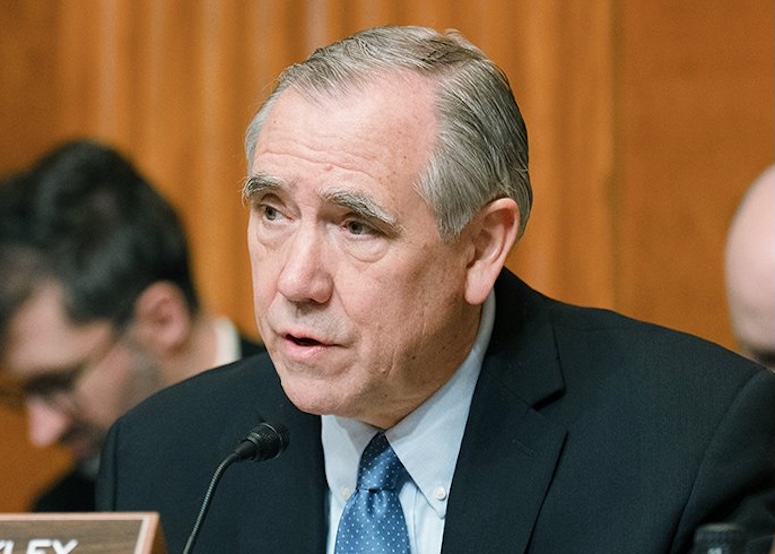
Oregon Senators Ron Wyden and Jeff Merkley have formally called on Interior Secretary Doug Burgum to halt the Trump administration’s pursuit of data center development on federal public lands. The two senators, joined by California Senator Alex Padilla, submitted a letter to Burgum on October 29, raising serious concerns about private companies potentially gaining access to nearly 18,000 acres of public land across six Western states. The letter demanded greater transparency regarding meetings that took place between the Interior secretary and data center developers.
The senators pointed to recently released internal calendars as evidence that Burgum had repeatedly met with technology executives and data center developers during the same period the administration was actively pursuing these projects on public lands. The lawmakers argued that the timing of those meetings raises significant questions about his personal involvement in facilitating the proposed arrangements.
The Washington Sun first reported in September that the Trump administration was evaluating at least a dozen proposals for data center projects on federal public lands across Oregon, Nevada, Arizona, Wyoming, Idaho, and Utah. The projects reportedly encompass nearly 18,000 acres and include land designated for privately owned data centers and related infrastructure.
A review of Burgum’s official calendar revealed that the Interior secretary met with dozens of technology and energy executives over the previous year. Among those meetings was a discussion with Amazon CEO Andy Jassy concerning permitting, infrastructure, and technology to support data center expansion. The senators questioned why those meetings occurred while the administration was simultaneously considering opening federal land to data center developers. “The timing of these meetings taking place concurrently with the administration’s efforts to pursue data center development on public lands raises serious questions about your involvement in these deals,” the senators wrote.
The lawmakers further criticized the administration for what they characterized as a significant lack of transparency surrounding its plans, asserting that Congress carries a constitutional responsibility to oversee the management of federal public lands. They raised particular concerns about the potential consequences of large-scale data center development on Western communities, specifically regarding water consumption, electricity costs, and continued public access to these lands.
Data centers demand considerable quantities of electricity and water to operate, especially facilities designed to support artificial intelligence systems. The senators cautioned that rising water demand could intensify drought conditions across Western states already experiencing substantial pressure on their water supplies. They also argued that such projects could drive up energy costs for households and businesses while restricting access to land that Americans currently rely upon for hunting, fishing, recreation, and livestock grazing. “Effectively privatizing public lands owned by American taxpayers sends a clear message that the Trump administration continues to prioritize the profits of tech CEOs and shareholders over the American people that rely on public lands for hunting, fishing, recreation, and livestock grazing,” the senators wrote.
The letter additionally raised concerns about whether the Department of the Interior had conducted adequate consultation with Native American tribes or provided local communities with sufficient information and meaningful opportunities to comment on the proposed developments. The senators maintained that the potential consequences for surrounding communities cannot be properly assessed without substantive consultation and full public disclosure of the projects. They demanded that Burgum immediately cease efforts to repurpose public lands for data center development and provide a detailed account of his role in the administration’s plans.
The lawmakers requested a written response from the Interior Department no later than November 16. The controversy has since expanded following the release of an updated analysis by the Center for Western Priorities, which identified considerably more potential development activity than initially reported. A report published by The Wildlife Society on October 27 indicated that the Bureau of Land Management was reviewing at least 35 applications involving data centers and related infrastructure across six Western states, covering more than 24,000 acres of public land.
The analysis identified at least 17 applications for data center campuses, along with 13 additional likely applications for supporting infrastructure such as access roads, water pipelines, telecommunications lines, and electricity transmission facilities. The findings drew from publicly available Bureau of Land Management rights-of-way records. The report further noted that many of the proposals had not previously been disclosed to the public and that some local officials remained entirely unaware of them.
Notably, the 24,000-acre figure encompasses both data center projects and supporting infrastructure, making it considerably broader than the earlier estimate of nearly 18,000 acres associated with the initial group of proposals. The report also observed that no formal permitting process currently exists specifically for the construction of data centers on federal public lands. Although federal land may be used for various purposes, including energy production, mining, and livestock grazing, the legal framework for permitting large-scale data center facilities remains unsettled. To date, only one data center project on federal public land had received approval, located near Boulder City, Nevada. That project was subsequently placed on hold pending additional environmental review and a court ruling.
Oregon stands among the states directly affected by these proposals, with federal land in eastern Oregon near Hermiston previously identified as a potential development site. Senator Wyden has already taken legislative steps to oppose the administration’s agenda. On September 30, he introduced a bill that would prohibit the construction, sale, or transfer of federally owned public lands for the purpose of developing new data centers and associated infrastructure. He also attempted to advance the legislation through an expedited process in the Senate, but Republicans blocked the effort. Wyden maintained that public lands belong to American taxpayers and must not be transferred for the benefit of private corporations. The Interior Department declined to comment on the letter, stating that it does not address congressional correspondence through the media.
The dispute places Burgum under mounting pressure to account for the administration’s meetings with data center developers and to provide detailed information regarding the proposed use of federal land. Senators Wyden, Merkley, and Padilla continue to seek answers as concerns intensify over the extent to which public land may be made available to the rapidly expanding data center industry.








Leave a Reply