

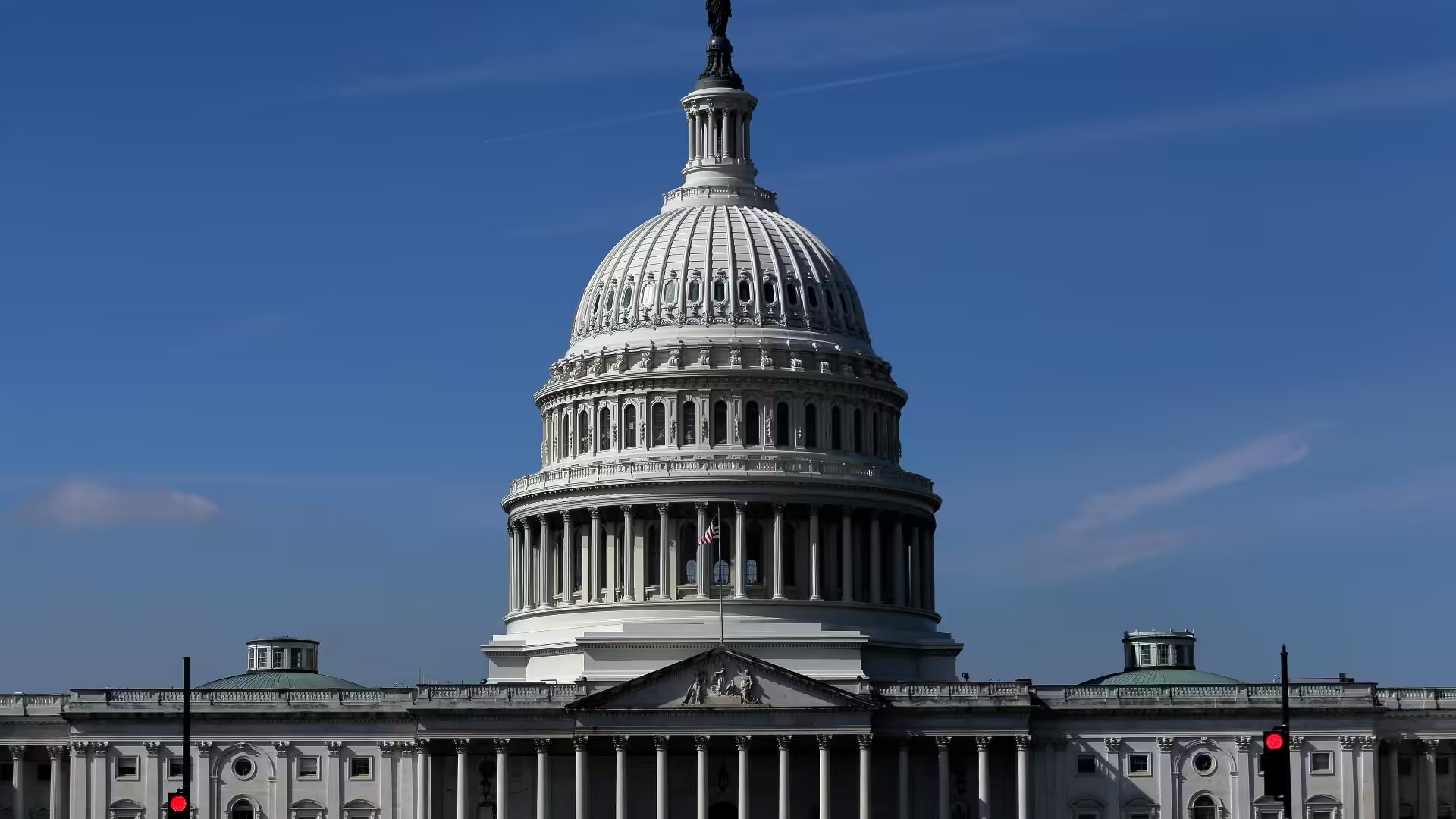
Lawmakers on Capitol Hill are preparing for a high-stakes war powers debate as military operations against Iran continue — despite the fact that U.S. airstrikes are already underway.
The joint U.S.-Israel campaign, dubbed Operation Epic Fury, has involved sustained bombing operations targeting Iranian leadership and military assets. At least three U.S. military personnel have been killed, and President Donald Trump has warned that more casualties are possible.
The unfolding conflict places renewed focus on Congress’ constitutional authority to declare war — a power it has formally exercised just five times in U.S. history, most recently in 1941 following the attack on Pearl Harbor.
War Powers Showdown
Both the House and Senate are preparing votes on war powers resolutions that would seek to limit or rebuke the president’s authority to continue military action without congressional approval.
Under the Constitution, Congress must authorize wartime operations through a declaration of war or an Authorization for Use of Military Force (AUMF). While lawmakers approved AUMFs in 2001 and 2002 following the Sept. 11 attacks, modern presidents from both parties have often initiated more limited military actions without prior approval.
Democratic Sen. Mark Warner, vice chair of the Senate Intelligence Committee, argued that the president should seek congressional backing.
“When the president commits American forces to a war of choice, he needs to come before Congress and the American people and ask for a declaration of war,” Warner said during an interview on CNN.
Political Divisions Emerge
While many lawmakers have criticized Iran’s nuclear ambitions, Democrats contend the administration has not clearly outlined the mission’s objectives or exit strategy. Some members of Trump’s political base have also expressed concern that the conflict contradicts his long-standing “America First” stance against prolonged foreign wars.
Republican Sen. Tom Cotton, chair of the Senate Intelligence Committee, defended the administration’s approach, saying the president has ruled out sending ground troops and instead plans an extended air and naval campaign.
“There’s no simple answer for what’s going to come next,” Cotton said on CBS’ “Face the Nation,” predicting a weeks-long operation as Iran reorganizes its leadership and response.
Limits of Congressional Power
Even if Congress were to pass a war powers resolution curbing the president’s authority, overriding a likely veto would require a two-thirds majority in both chambers — a steep hurdle given Republican control of the House and Senate.
Legal scholars note that Congress’ most potent tool may be its control over federal funding. Historically, lawmakers curtailed U.S. involvement in Vietnam by cutting off funding for military operations.
White House officials are expected to brief congressional leaders this week in closed-door sessions. As debates begin, the outcome may define not only the trajectory of the Iran conflict but also the balance of power between Congress and the presidency in matters of war.










Leave a Reply