

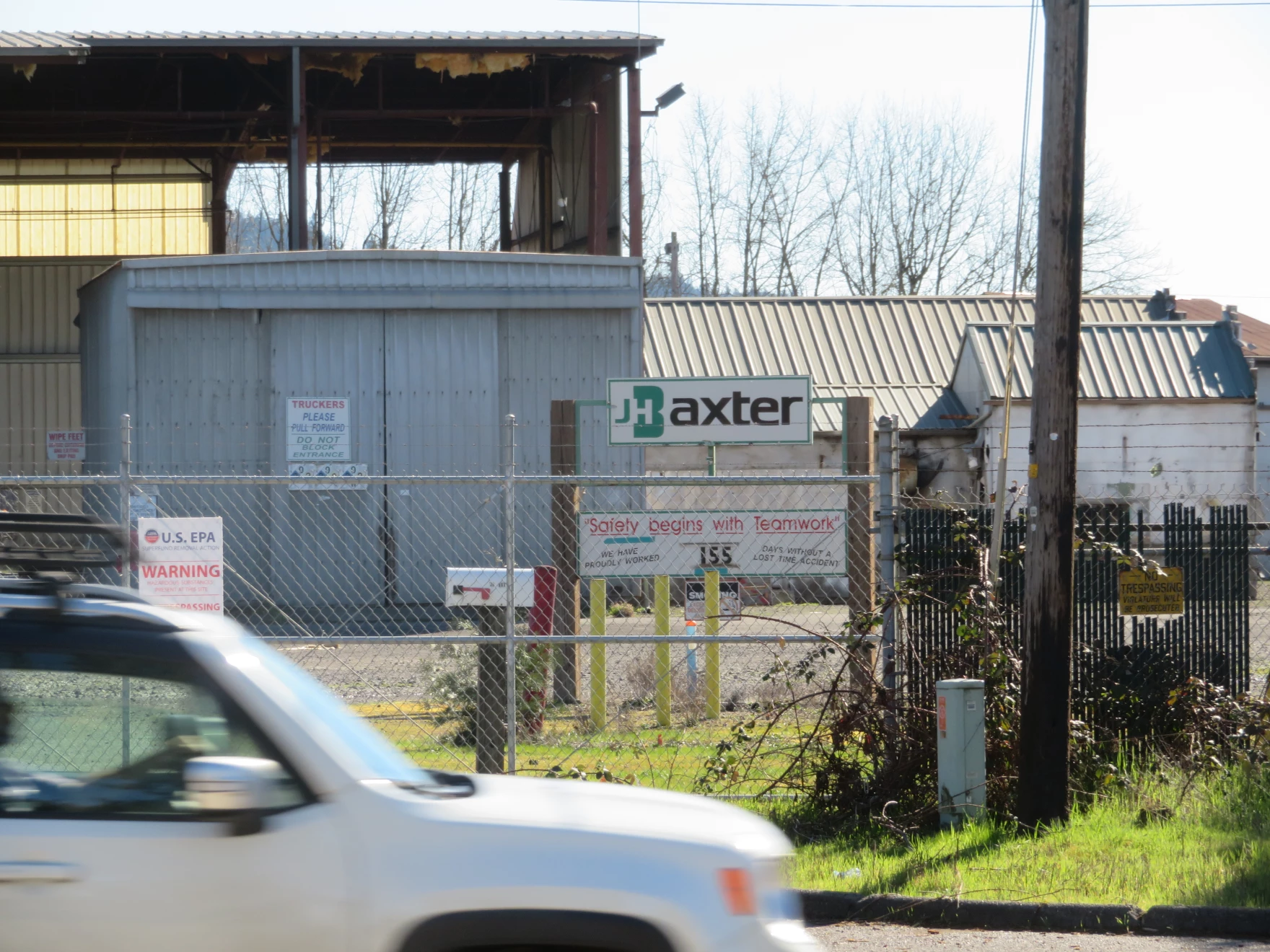
The final civil lawsuit filed against the J.H. Baxter related to its former wood treatment plant in Eugene has been dismissed, ending the last remaining legal challenge tied to the facility.
Mustafa Kasubhai of the U.S. District Court for the District of Oregon granted a motion Friday to dismiss the case Hart et al v. J.H. Baxter et al with prejudice at the request of the plaintiffs and their attorneys. The ruling means the case cannot be refiled.
The lead plaintiff, Miles Hart, a former maintenance lead at the company, said he was fired in 2014 after raising concerns about environmental practices at the plant. Hart alleged that while the company was once respected for producing treated railroad ties and telephone poles, it later cut corners and failed to meet environmental standards.
The facility operated in Eugene’s Bethel neighborhood for roughly 80 years and was the subject of numerous complaints from nearby residents over emissions and possible contamination during its final decades.
At one point, the case — along with another lawsuit, Bell-Alanis et al v. J.H. Baxter et al — was certified as a class-action case involving potentially thousands of affected residents. Earlier this year, however, federal judges decertified the cases after the company became insolvent.
Hart said continuing the lawsuit no longer made sense because the company lacked assets.
In April 2025, a judge ordered the company to pay a $1.5 million penalty and sentenced its president, Georgia Baxter‑Krause, to 90 days in prison.
By that time, nearly all J.H. Baxter facilities had shut down, including the Eugene plant, which closed in January 2022.
The property was designated a Superfund site in July 2025 by the U.S. Environmental Protection Agency, meaning extensive environmental cleanup will be required for years before the land can be safely reused.
Nearby residents have reported concerns about dioxin contamination in soil and gardens around the plant. State environmental officials have already removed contaminated soil from some properties.
Although the lawsuits have ended, residents say the cleanup process and long-term environmental impacts will continue to affect the community for years.









Leave a Reply