

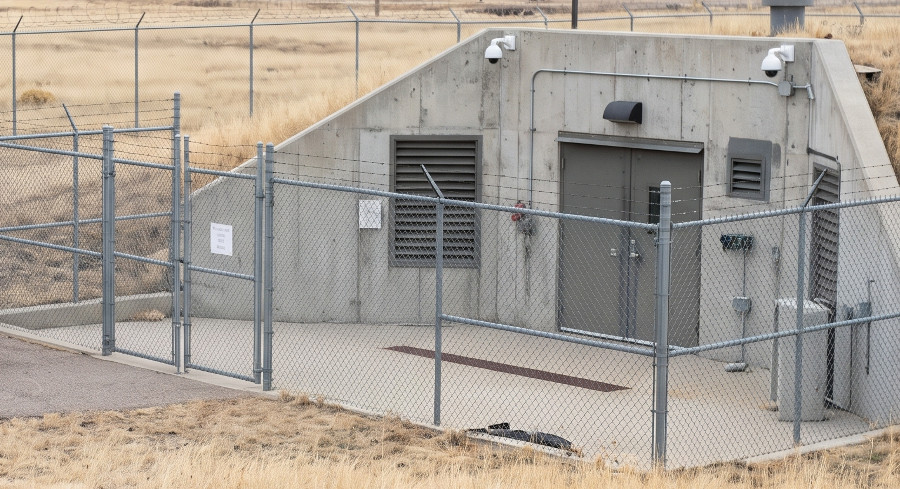
Deep beneath the Wyoming prairie, within the concrete bunkers where airmen stand guard over America’s intercontinental ballistic missiles, the Environmental Protection Agency is carrying out an unexpected but critical mission: protecting the missileers from hazards within their own aging installations.
During a tour spanning Wyoming and Colorado, the EPA’s senior enforcement officials entered active military alert facilities to conduct workplace hazard inspections, before traveling to the Rocky Mountains to establish federal priorities for prosecuting environmental crimes.
Jeffrey A. Hall, Assistant Administrator for Enforcement and Compliance Assurance, accompanied Principal Deputy Craig Pritzlaff on a descent into a Minuteman launch control center and silo at F.E. Warren Air Force Base. The installation serves as command headquarters for the Twentieth Air Force, the unit responsible for operating the nation’s nuclear deterrent.
As Global Strike Command confronts the realities of decades-old underground infrastructure, EPA leadership assessed indoor air quality, hazardous substances, and environmental compliance within the confined quarters where crews endure extended shifts on standby.
“We are keeping the airmen stationed in missile alert facilities safe by helping the Air Force comply with toxic substances regulations, and that allows our warfighters to focus on defending our country,” Hall said.
The tour represented a notable convergence between military readiness and federal pollution oversight, supported by a formal partnership between the EPA and the Department of Defense to address environmental threats directly on military installations.
The delegation subsequently traveled to Colorado, shifting its focus from Cold War-era concrete structures to the courtroom, attending the EPA’s biannual criminal enforcement training conference.
Addressing agency prosecutors, Hall outlined a sharpened mandate aligned with Administrator Lee Zeldin’s “Powering the Great American Comeback” initiative: pursue those who smuggle toxic chemicals across U.S. borders and dismantle high-stakes corporate environmental schemes.
“Our highest priority for our criminal program is that it holds the worst environmental criminals accountable while being true to the Constitution and the rule of law,” Hall said. “EPA’s criminal enforcement attorneys ensure that our criminal program can investigate and prosecute cases effectively and lawfully.”
Behind closed doors, agency attorneys examined Fourth Amendment search doctrines, refined litigation strategies, and analyzed appellate rulings aimed at constructing airtight criminal indictments. The agency’s central directive for the coming year remains clear: identify and intercept foreign toxins entering American communities, dismantle intentional dumping operations, and safeguard the personnel responsible for protecting the nation’s most sensitive defense installations.






Leave a Reply